Remember when personalized email marketing meant dropping a first name into the subject line and calling it a day? “Hi {{FirstName}}, don’t miss our sale!” Marketers loved it. Subscribers, less so.
That trick still works, a little. But the bar has moved a long way, and last week it moved again. On September 9 at K:BOS, Klaviyo announced it’s going headless, opening its CRM to Claude, ChatGPT and whatever other AI tools a team already uses. Tucked into the same release is the part I keep coming back to: specialized personalization models, one for each decision. Who to reach, what to show them, when to reach them, and where. Klaviyo describes them as models built for each decision, not a general assistant offering suggestions.
It’s a real step forward for personalized email marketing. It also stops just short of the moment that matters most.
What the new personalization models decide
Set the agent framing aside and the models are making four calls in advance:
- Who: audience optimization against live RFM (recency, frequency, monetary value) data.
- What: 1:1 content, product recommendations and discount decisioning.
- When: personalized send time.
- Where: channel affinity.
That’s genuinely useful. I’ve watched teams spend weeks hand-building segments that a well-trained model could approximate in minutes, and those people would rather be thinking about strategy than list logic. If your personalization still runs on rules somebody wrote by hand in 2019, this is a real upgrade.
But look at the tense. Every one of those decisions is made before the email goes out. The model looks at what it knows right now, commits to a choice, and that choice sits frozen in the email until someone opens it. Sometimes that’s seconds later. Sometimes it’s four days later, on a phone, in a different city, after the thing you personalized around has already changed.
The gap between “decided” and “true”
Here’s a question for your own program: how many of your personalized touches are still accurate by the time someone opens the email?
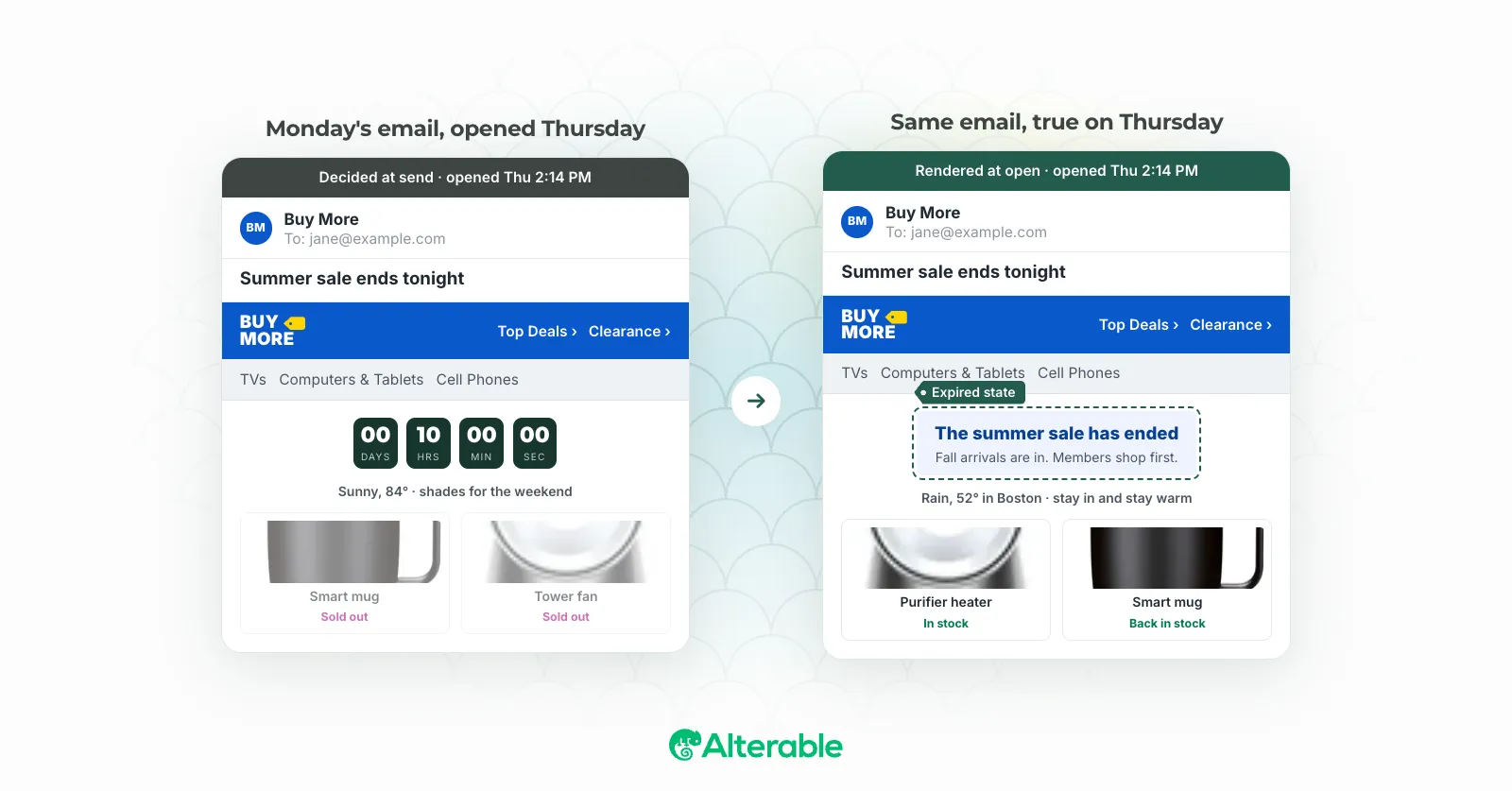
The failures are familiar once you look for them. A countdown GIF still reading “10 hours left” on Thursday, because the frames were fixed on Monday when the file was made. A product block recommending the jacket that sold out overnight, because the picks were locked in when the campaign went out. Neither is really a personalization failure. They’re timing problems wearing a personalization costume.
That’s the blind spot in even the smartest send-time model. It can be very good at predicting who wants what and when, and it still can’t know what’s true at the one moment that counts, which is when the recipient opens the email.
Where dynamic email content picks up
If I were in the room for Klaviyo’s roadmap planning, this is where I’d push back: personalization isn’t one decision, it’s two.
There’s the strategic decision: who, what, when, which channel. That can happen upstream, days ahead. Then there’s the rendering decision: what this block should show, right now, for this person. That one can’t be made days ahead. It has to happen at open.
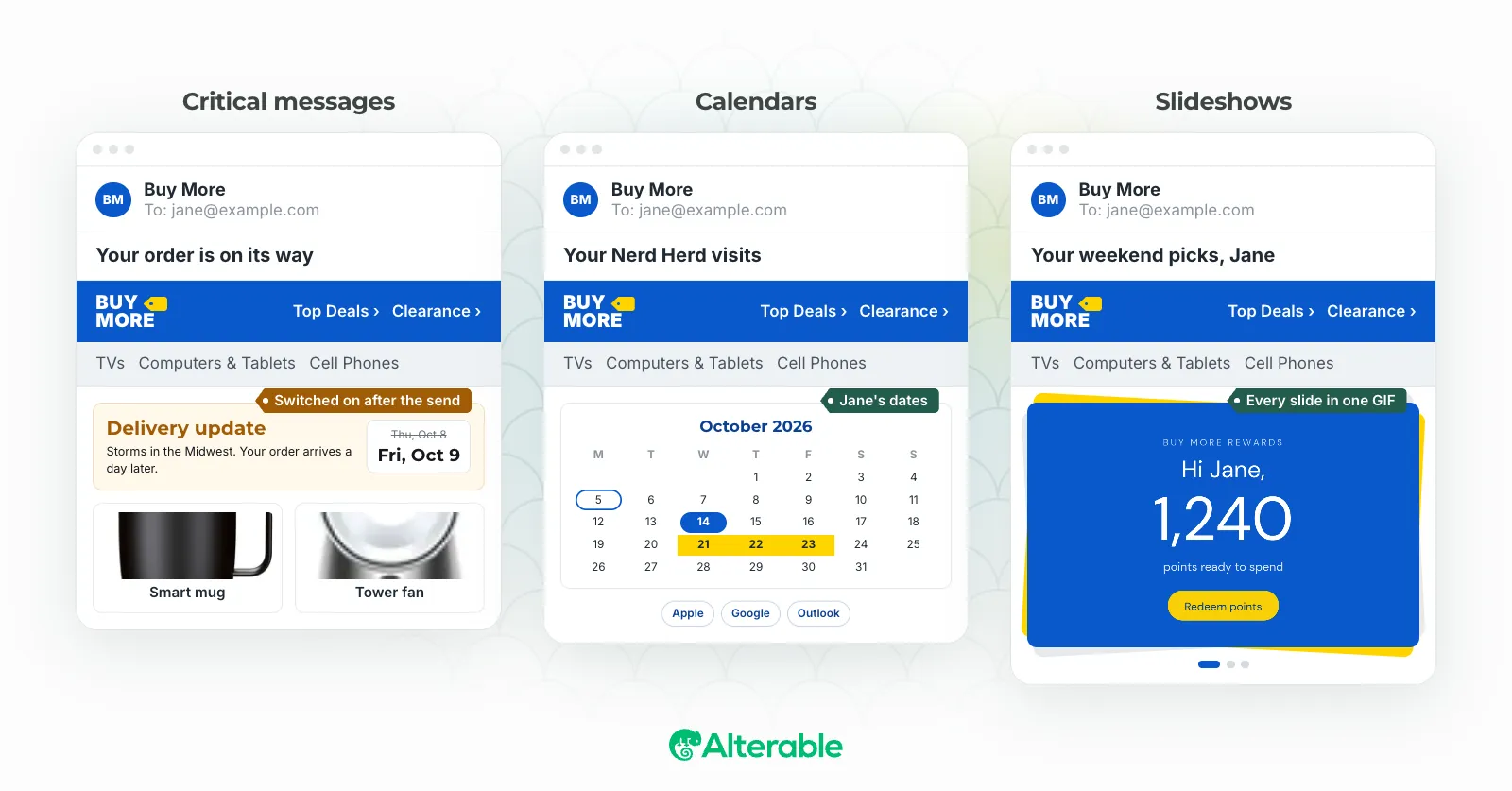
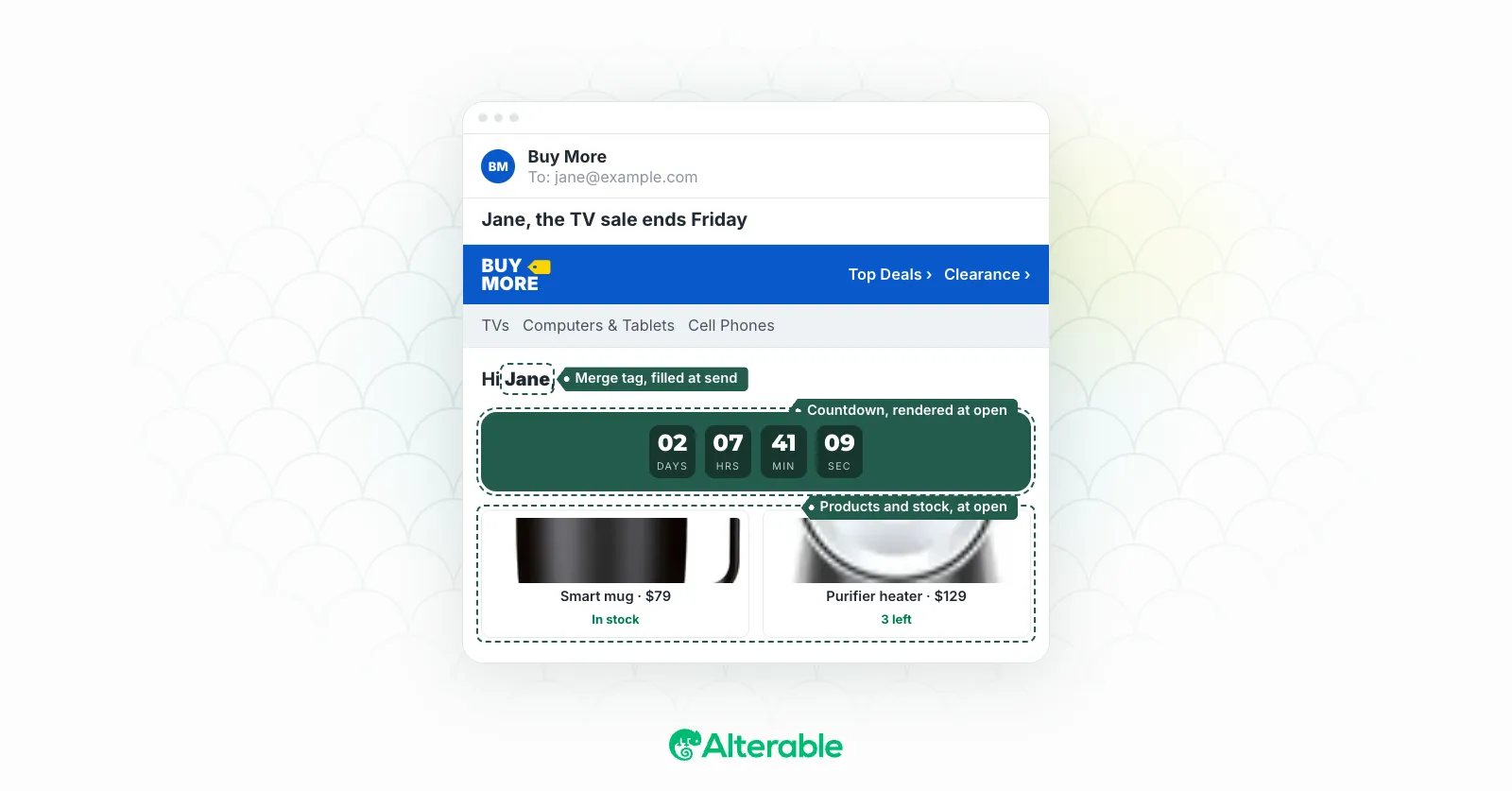
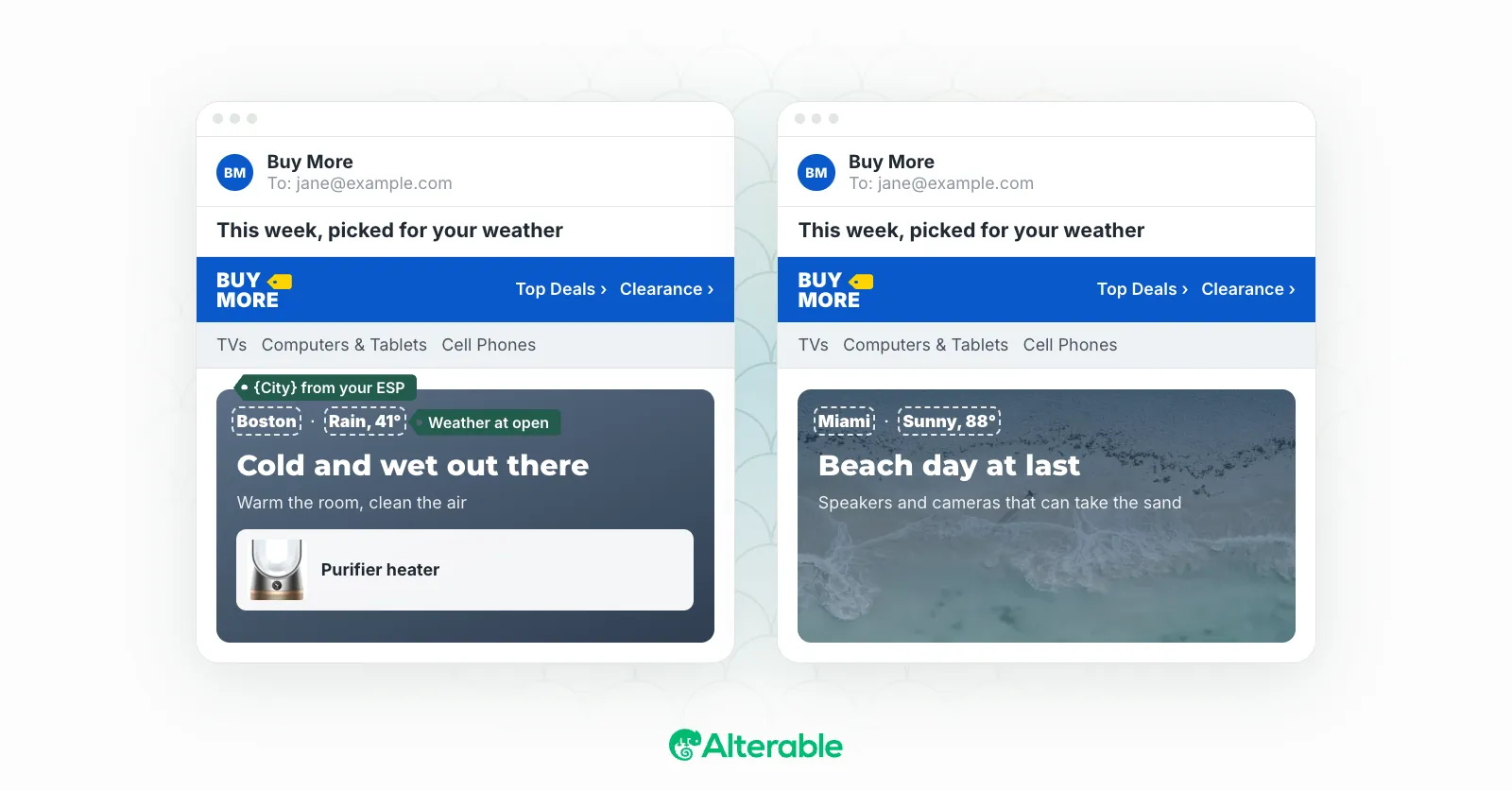
That’s what dynamic email content is for. Instead of freezing an image, a countdown or a product grid at send time, the content renders when the email is opened, using current stock levels, local weather, the reader’s nearest store, or wherever the countdown actually stands right then. One email, sent once, correct whenever it’s opened.
The two approaches don’t compete. A strong personalized email marketing program needs both: smart send-time decisions about audience and timing, and content that stays true no matter when someone looks at it. Get only the first one right and you’ve built a beautifully targeted email that’s slightly wrong by the time anyone reads it.
The practical takeaway
Next time you audit a campaign, don’t stop at asking whether it’s personalized. Ask when that personalization was decided, and whether it still holds an hour, a day or a week later. If the honest answer is “depends when they open it,” that’s the gap, and it’s rarely a small one.
That’s the layer Alterable was built for: content that renders at the moment of open, not the moment of send. Countdown timers, product blocks that follow stock, weather-aware images and maps to the nearest store all stay current because they’re decided last.