Six months ago, “agent” was still a word you had to define in a meeting, unless you meant the one in the sunglasses. Now every major customer engagement platform ships an AI marketing agent, and if you run email for a living, somebody has already asked whether yours is switched on yet.
Klaviyo put Composer into public beta alongside an expanded Customer Agent. Braze launched Operator and Agent Console in April. Iterable shipped Nova Agent the same week. Same quarter, same pitch, demos so similar you could swap the logos. When a category converges that hard that fast, it usually means the underlying capability got cheap. It doesn’t mean the problem got solved.
Which raises the question nobody selling you an AI marketing agent particularly wants to answer: what does one actually do well, and where does it quietly come apart?
What AI agents for marketing genuinely handle
Let’s give the category its due, because the skepticism only counts if you’re fair first.
The agents are good at the work that is tedious, well-specified, and easy to check. Drafting a first-pass campaign brief. Generating twenty subject line variants when you’re stuck on three. Surfacing the flow that’s been quietly failing since a schema change in June. Answering “which segment did we exclude last time and why” without you digging through six months of campaign history.
Predictive scheduling deserves a specific mention. Send-time optimization and audience trimming are exactly the kind of narrow, high-volume decisions where a model beats human intuition, because the decision repeats thousands of times and the feedback loop is tight. You’d never tune send time per subscriber by hand. A model doesn’t mind.
There’s also a finding from the Litmus State of Email 2026 report that surprised me: advanced AI adopters are 54% more likely to follow WCAG standards and 52% more likely to comply with the European Accessibility Act. That correlation runs opposite to the usual worry about automation flattening quality. My read is that teams disciplined enough to systematize their email production are the same teams disciplined enough to build it accessibly. The automation doesn’t cause the rigor. It reveals which teams had it.
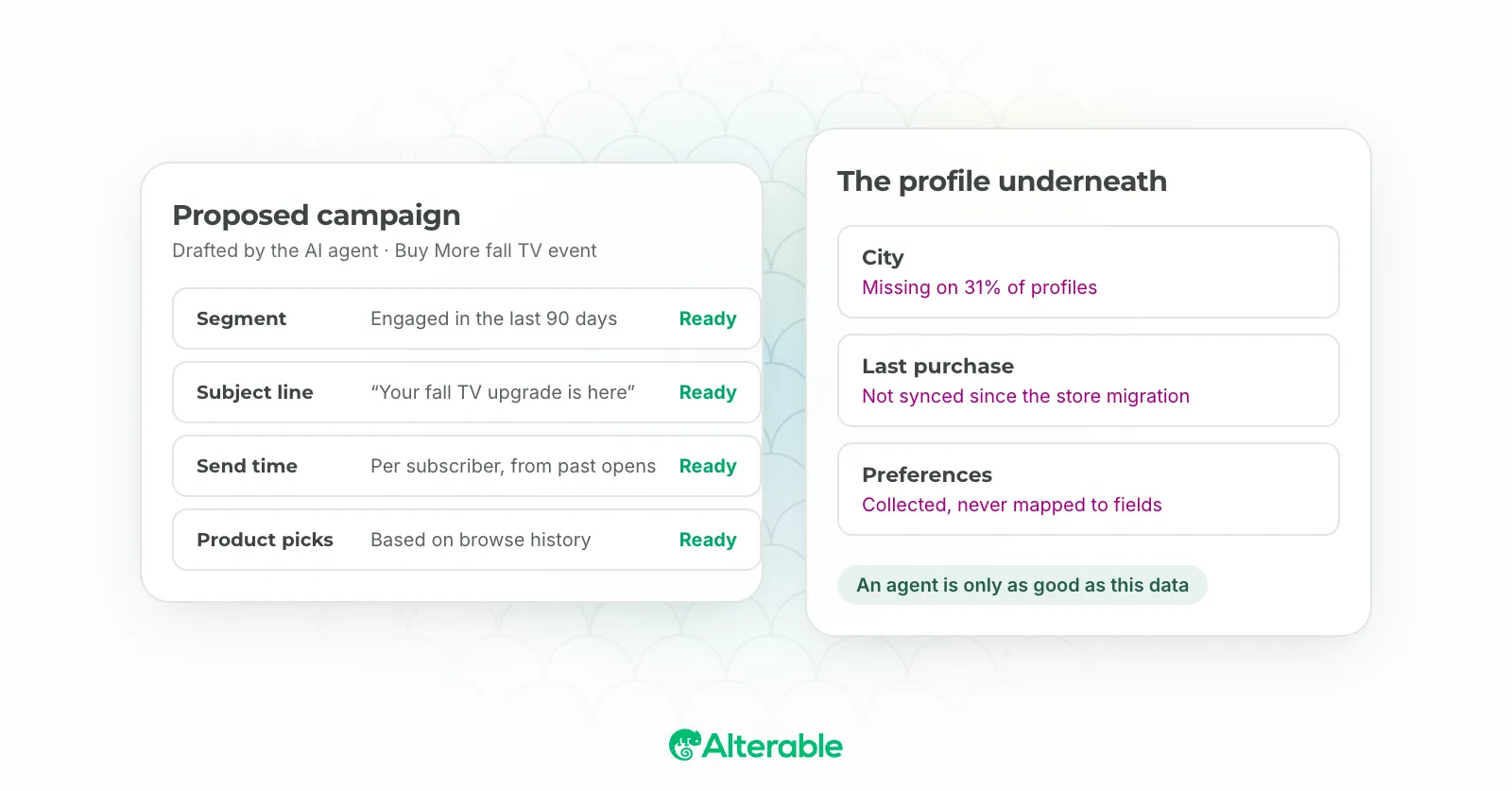
Your AI marketing agent is only as good as the profile underneath it
Here’s where the demos stop being representative.
Every one of these agents reasons over a customer profile. Klaviyo is explicit about this: both agents work off the same real-time profile, and each action enriches what the other sees. That’s the right architecture. It’s also the whole dependency.
An agent asked to build a segment for lapsed high-value buyers will build one. Confidently. Whether that segment is any good depends entirely on whether “high-value” is defined consistently across your data, whether purchase events fire reliably, and whether the last agency that touched your account left three overlapping definitions of the same thing sitting in your properties.
The failure mode looks like this: a month spent tuning an agent’s instructions, when the actual problem is a purchase event that stopped firing on mobile in March. The agent isn’t wrong. It reasons perfectly over bad inputs and produces a confident, well-formatted, completely useless audience.
This is the part most teams skip, because auditing your event data is boring and turning on an agent is exciting.

The part that still needs a human
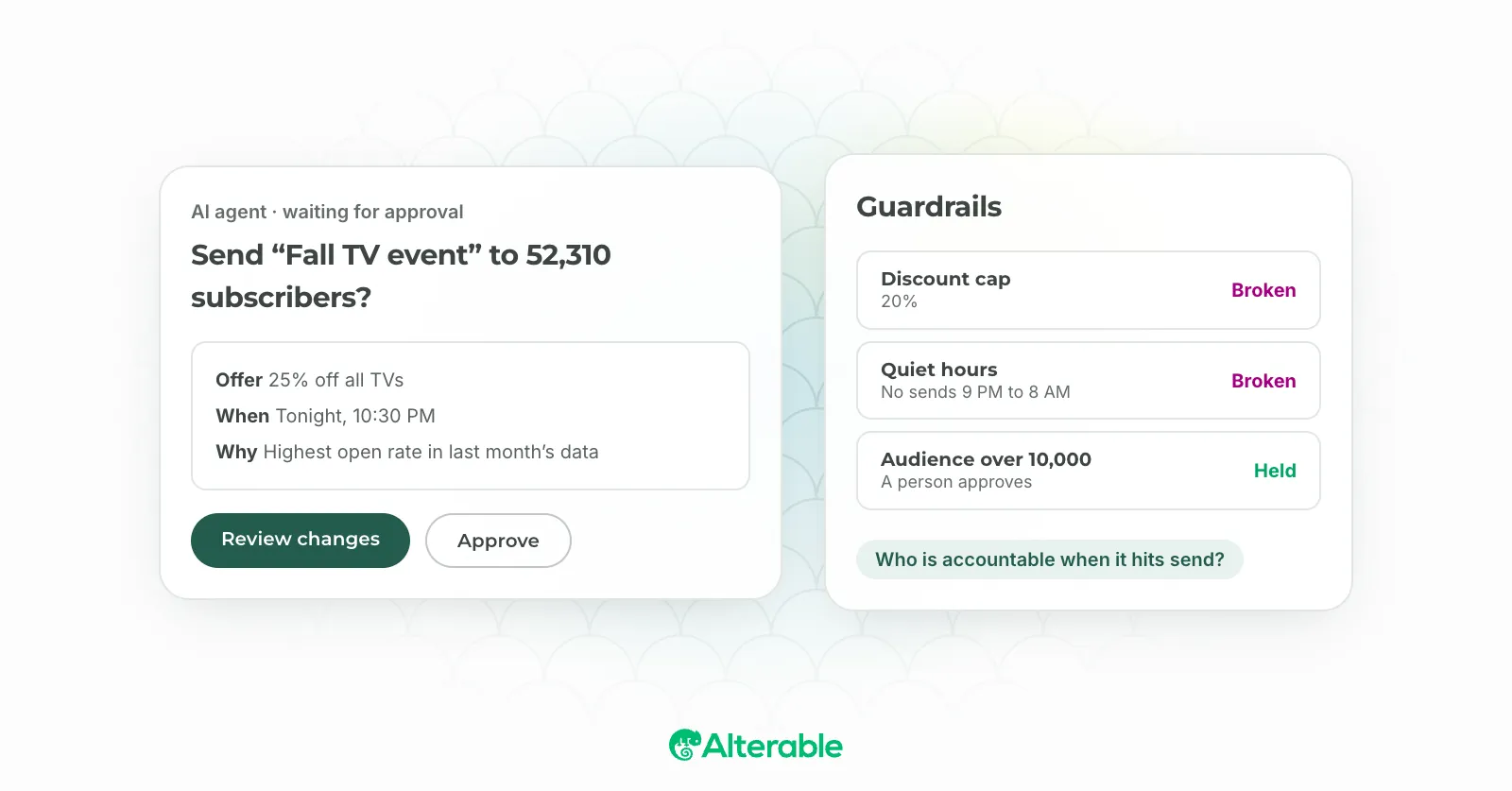
Agents decide who gets a message and roughly when. That’s genuinely useful. But it’s a different job from deciding what a person sees when they open the thing, and the two get conflated constantly. I wrote in July about who’s accountable when an agent hits send. This is the other half of that problem.
Consider what’s happening on the receiving end. Gmail’s AI Inbox has expanded past the Ultra tier to AI Plus and AI Pro subscribers in the US, summarizing and prioritizing messages before a human looks at them. So you now have an agent on your side composing the send, and an agent on the recipient’s side deciding whether it’s worth surfacing. As Dave Schools of Singulate put it to MarTech, the difference between a “deprioritized generic blast” and a “relevant, important message” has never been higher stakes.
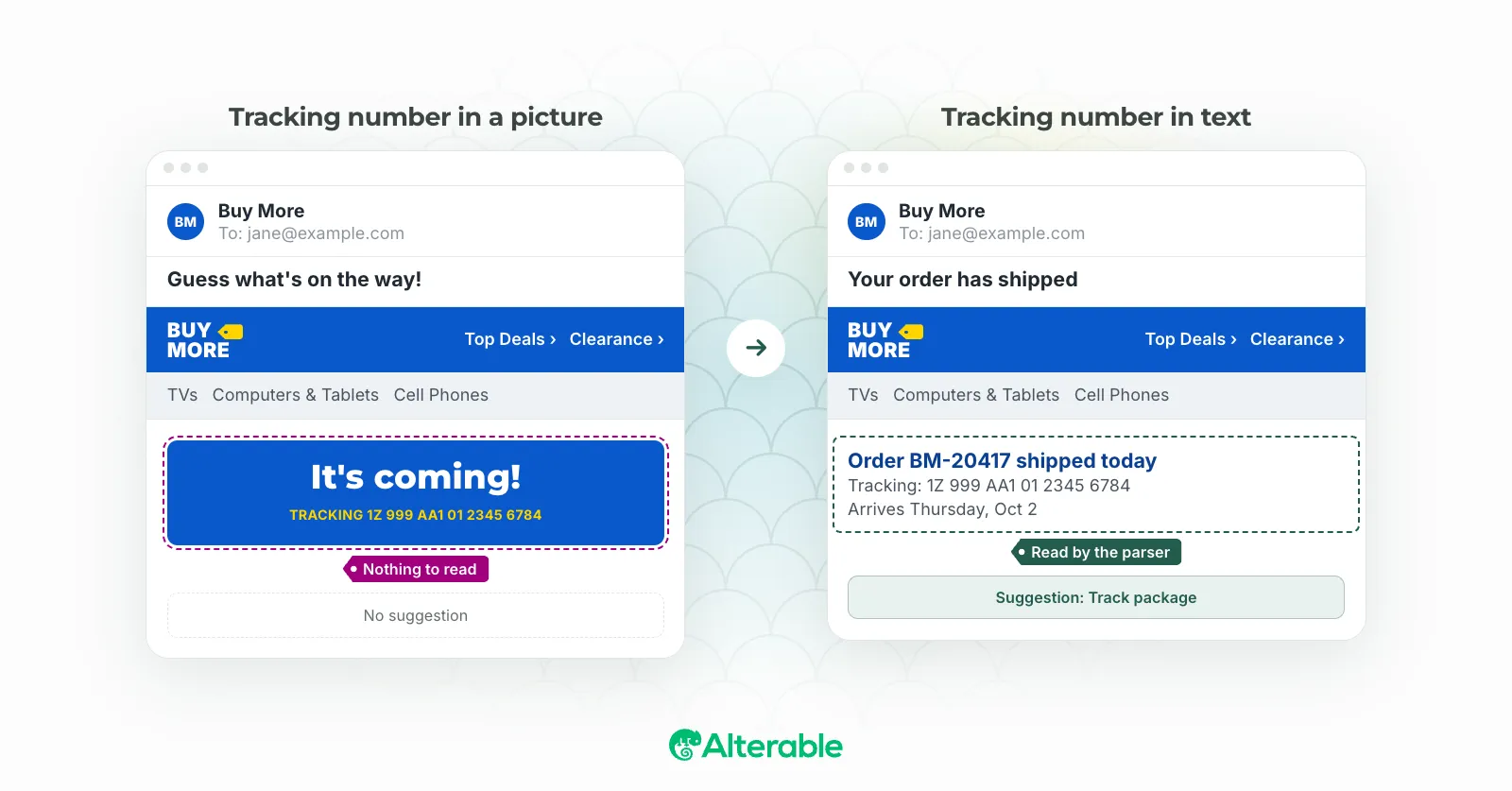
An AI marketing agent optimizing send time doesn’t help you clear that bar. Neither does a better-worded subject line, not really. What clears it is the message being genuinely specific to the person receiving it: their store, their tier, their cart, their deadline. Relevance at the content level, not the targeting level.
And there’s a measurement trap waiting. Open rate was already unreliable after Apple’s Mail Privacy Protection started pre-loading images, with Apple clients now accounting for well over half of all tracked opens. Now AI Inbox opens messages on the user’s behalf too. If your agent optimizes against open rate, you’ve built a very sophisticated system for pleasing robots. Point it at revenue, reply rate, or downstream conversion instead.
What to fix before you turn one on
Four things, in order:
- Audit your events. Pick your five most important behavioral triggers and verify each one fires correctly on mobile, on desktop, and through whatever integration touched them last. Do this before anything else.
- Reconcile your definitions. If “active subscriber” means something different in your ESP than in your warehouse, the agent will pick one and never tell you which.
- Change your success metric. Move off opens now. Not eventually.
- Decide what the agent isn’t allowed to touch. Pricing claims, legal copy, anything with a compliance obligation attached. Write it down before the first campaign, not after the first incident.
None of this is exciting work. All of it determines whether the agent you turn on is an asset or a very fast way to send the wrong thing to the wrong people.

Where AI in email marketing goes over the next twelve months
The agents will get better at the targeting layer. That’s a solvable problem and there’s enormous commercial pressure behind solving it.
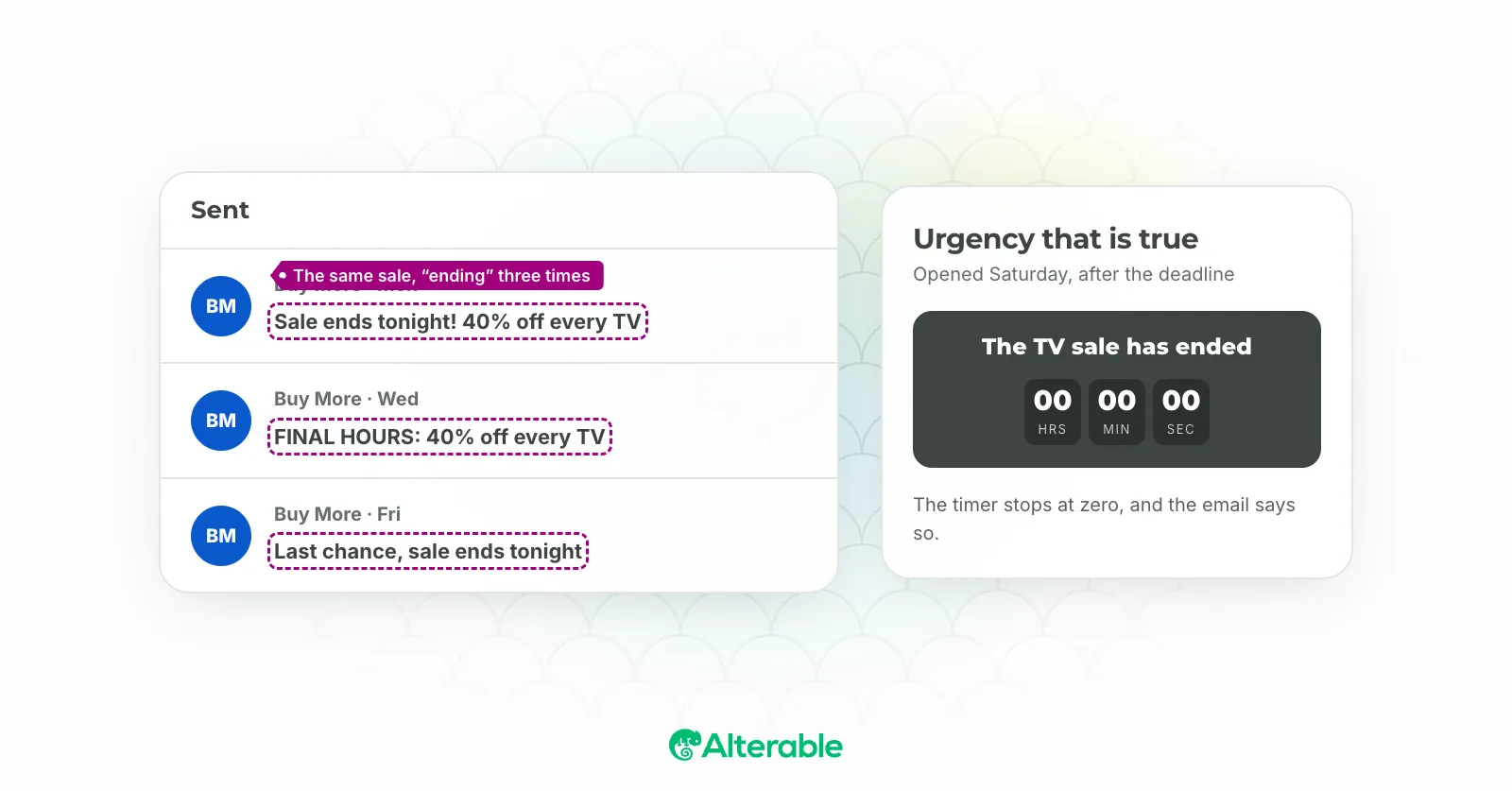
The content layer is a different question. An agent can decide that a customer in Lyon who abandoned a cart on Tuesday should hear from you Thursday morning. It can’t make the image in that email show the right product, at the right remaining stock level, with the right countdown, at the moment she actually opens it on Saturday. That decision has to happen at open time, because by Saturday the Thursday decision is already stale.
That gap is roughly where we’ve built Alterable: content that renders when the email is opened rather than when it’s sent. If you’re bringing an AI marketing agent into your program this year, it’s worth being clear which of those two problems you’re actually solving, because buying a solution to one and expecting it to fix the other is how good email programs end up disappointed in perfectly good software.
Start with the event audit. Everything else gets easier after that.