A few years ago, “automation” in email meant a welcome series and a birthday coupon. You built the flow once, checked it every few months, and moved on. It felt like the future. Compared to what shipped this July, it looks quaint.
This month HubSpot rolled out Agent Hub and Agent Builder in public beta, a place to spin up AI agents that pull from your CRM and run workflows on their own. Klaviyo pushed its own Marketing Agent and Customer Agent across email, SMS, and push. The pitch is roughly the same everywhere: describe the outcome you want, and the AI email agent figures out the campaign. Segment, draft, time the send, adjust.
I’m genuinely excited about this. I also think it’s the moment where a lot of email programs quietly lose the plot. So let me ask the question the demos skip: when an agent sends the email, who’s actually accountable for it?
The gap between “automated” and “accountable”
Here’s a pattern I’ve seen play out more than once. A team adopts a powerful new tool, the early results look great, and everyone relaxes. Six weeks later something’s off. Engagement is sliding, a segment is getting mailed twice, the tone in a few sends doesn’t sound like the brand at all. Nobody caught it, because nobody thought it was their job to catch it anymore. The tool was handling it.
That’s the trap with AI email agents. Automation removes the work. It doesn’t remove the responsibility. And those two things are easy to confuse when the dashboard is green.
An agent can draft a subject line. It can’t feel the small wince you get reading a line that’s technically fine but slightly off-brand. An agent can pick a send time from historical data. It can’t know that your biggest account just had a rough support week and this is the wrong morning to ask them for a review. That judgment isn’t a workflow step. It’s the part that makes the email feel like it came from a person.
What the agent is good at, and what it isn’t
Let’s be fair about where this genuinely helps. Agents are strong at the mechanical middle of the job: generating variants, reconciling data across systems, running the tests you’d never have time to run by hand, catching a broken merge field before it goes out. This is real work, and handing it off is a gift. I’ve watched teams spend an afternoon on QA that an agent now does in a minute.
The trouble starts when we let “it can do this” slide into “it should decide this.” Those are different claims. A few decisions still belong to a human, and I’d argue they always will:
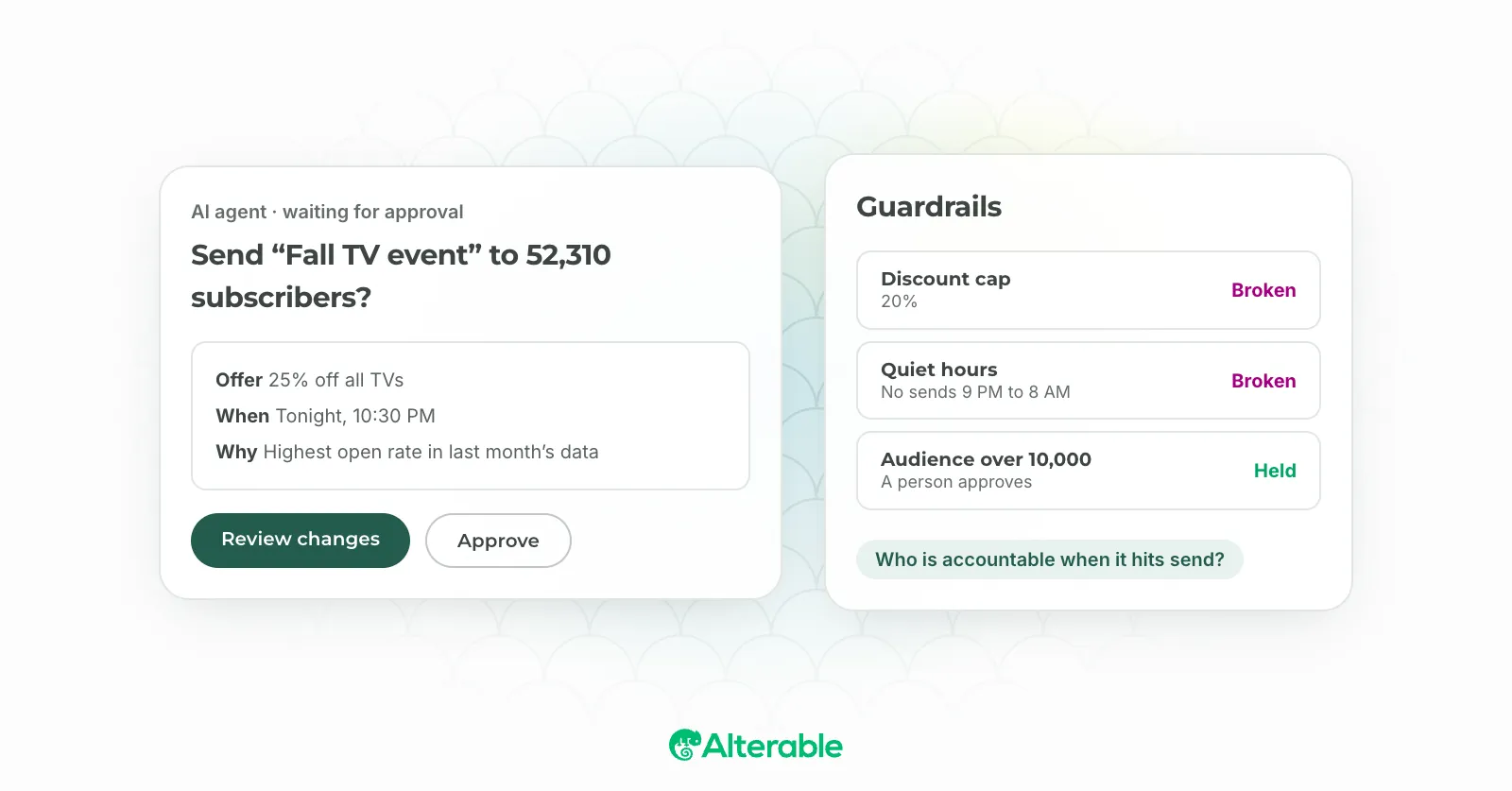
- What you’re willing to say to a customer. Voice, promises, and tone are brand commitments, not outputs. An agent proposes. A person approves.
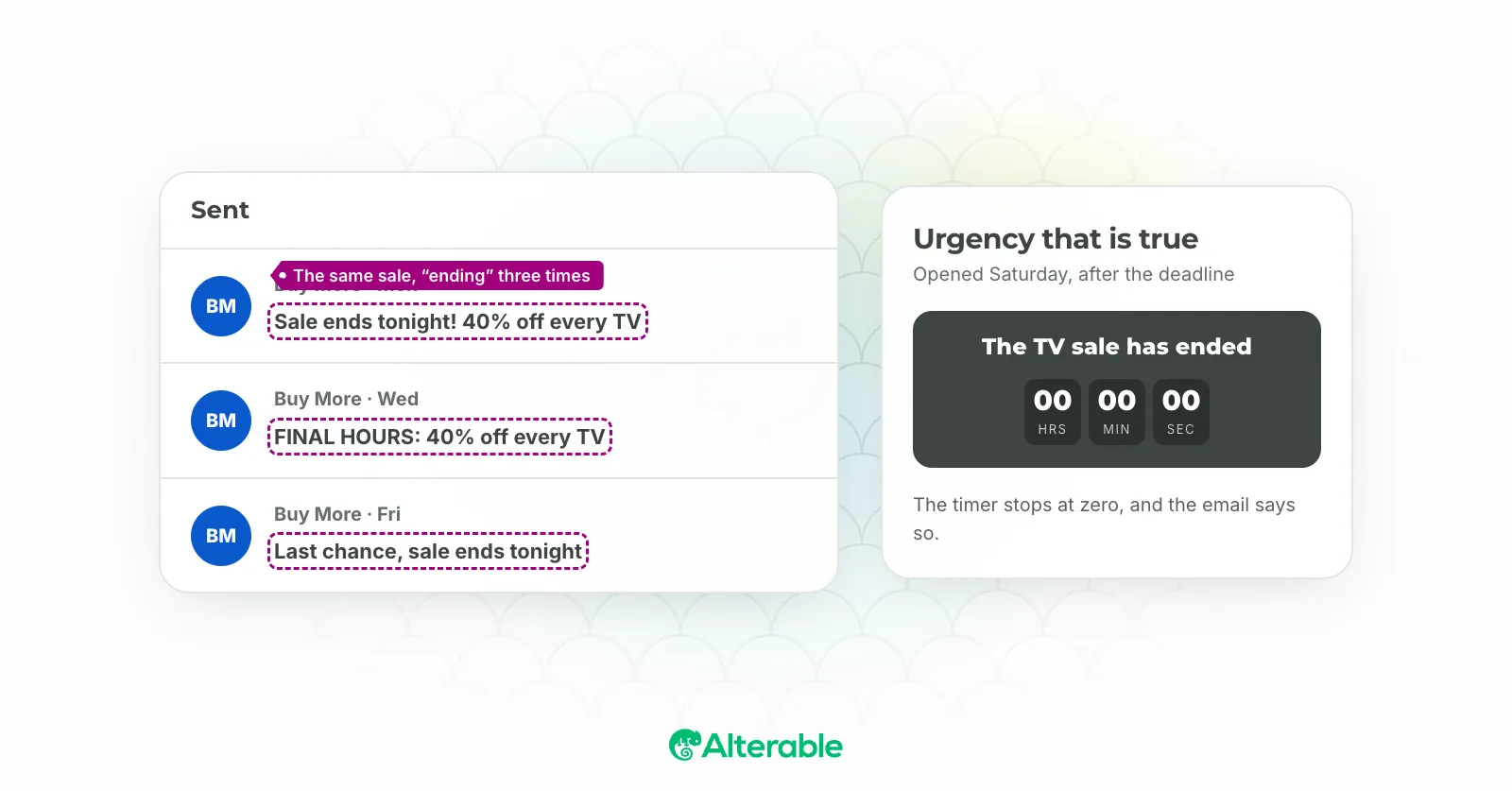
- When silence is the right call. The hardest send decision is often not to send. Agents optimize for engagement, which means they rarely suggest doing nothing.
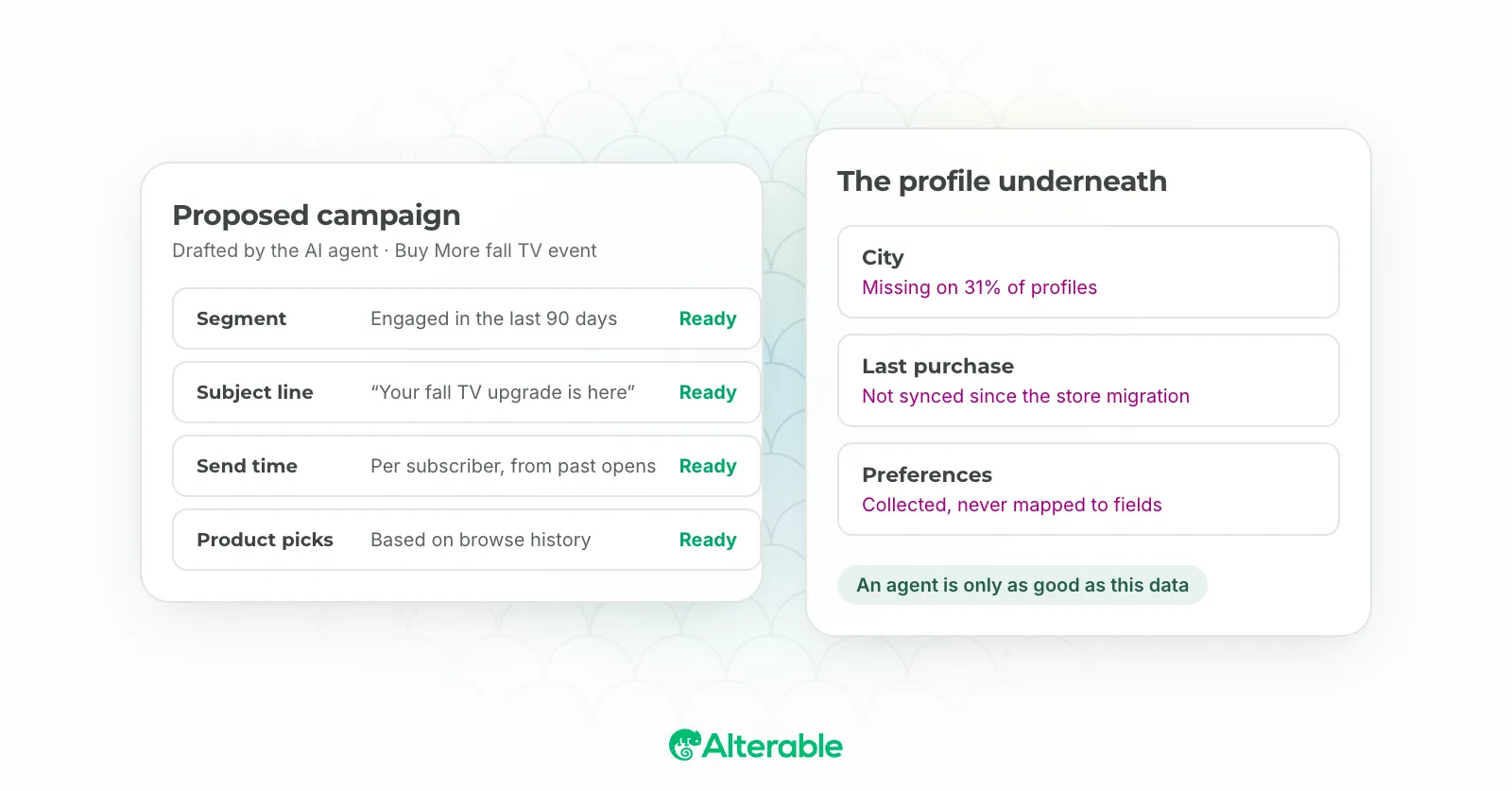
- What the data actually means. An agent will happily act on a signal that’s real but misleading. Knowing the difference is context, and context lives with your team.
None of this is an argument against the tools. It’s an argument for keeping a hand on the wheel while you use them.
Set the guardrails before you hand over the keys
The teams who’ll do well with agents aren’t the ones who adopt fastest. They’re the ones who decide, up front, which calls the agent gets to make alone and which ones route back to a person. Draft freely, sure. Send to a 200,000-person list without a human glance? That’s a policy you should choose on purpose, not discover after the fact.
In practice this looks less like distrust and more like good delegation. You’d never hand a new hire the keys to your whole list on day one and disappear. You’d let them draft, you’d review, you’d widen their latitude as trust builds. Treat the agent the same way. It’s a fast, tireless junior teammate, not a replacement for the person who understands why the email matters.
That understanding is where the actual leverage sits. When you know what you’re trying to say and to whom, the agent becomes an accelerant. When you don’t, it just helps you send the wrong thing faster.
This is also why the underlying content still has to be right at the moment of open, not just at the moment of drafting. An agent can assemble the message, but the personalization has to reflect who’s reading it right now. That’s the layer we care about at Alterable, and it’s the one worth keeping human eyes on. The agent can build the email. You still decide it’s worth sending.