There’s a version of email marketing that treats the subscriber list as a number to grow at all costs. Sign-up forms that pre-check consent boxes. Data collected without a clear explanation of what it’ll be used for. Lists built fast, with little thought for who’s actually on them.
That approach still exists. But the regulatory environment has made it significantly more expensive, and the deliverability consequences have made it more self-defeating than ever. The good news is that building a list the right way and building a list that performs well turn out to be the same thing.
This post covers the two main opt-in approaches, the legal frameworks that shape how you should use them, and what actually matters when you’re setting up your opt-in process in practice.
Building a Responsive Subscriber Base: Single vs. Double Opt-in
Neither approach is universally right. They involve real trade-offs, and the better choice depends on your audience, your sending frequency, and your regulatory context.
Single opt-in: faster list growth, more maintenance required
With single opt-in, someone enters their email address and they’re on your list. No confirmation step. It’s the path of least friction, and that matters: every additional step in a signup flow reduces completion rates.
The tradeoff is quality control. Single opt-in lists are more vulnerable to typos (which inflate your bounce rate), to bots, and to people signing up with email addresses they don’t really use. Over time, that creates a list with more dead weight, which hurts your engagement metrics and, by extension, your deliverability.
If you go with single opt-in, a CAPTCHA on the form and basic email validation at the point of entry are worth implementing. They don’t eliminate the problem, but they reduce it meaningfully.
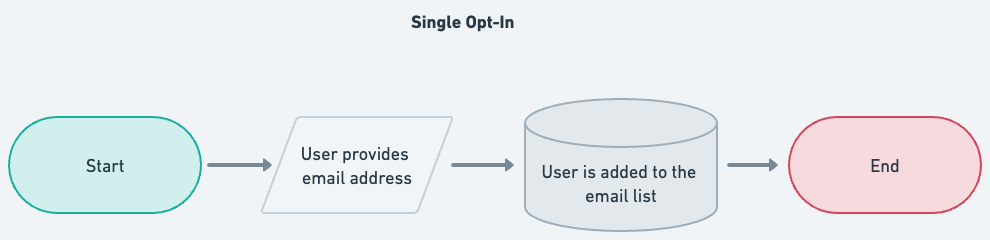
Single opt-in lets users instantly subscribe to your email list by providing their email address. The signup is one step, which is one fewer place to lose someone. Using a single opt-in may offer a fast way to subscribe. However, it can also open you to potential abuse from malicious bots or users. To reduce risks and ensure a high-quality subscriber base, it’s recommended to implement extra measures such as CAPTCHA verification (Google Recaptcha is a useful free tool) or email validation.
Double opt-in: better list quality, fewer but more engaged subscribers
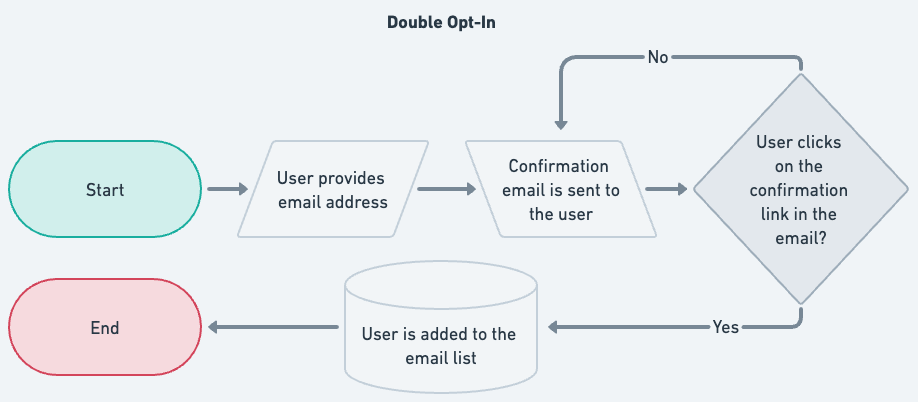
With double opt-in, someone enters their email and then receives a confirmation message. They only join your list after clicking the link in that message. Two steps instead of one.
The result is a smaller but more intentional list. The people who complete both steps actually want to hear from you, which means better open rates, lower unsubscribe rates, and fewer spam complaints. I’ve seen senders switch from single to double opt-in and watch their open rates climb noticeably, even as the raw subscriber count grew more slowly.
Double opt-in also gives you documented proof of consent, which matters a great deal under GDPR and is a useful defense if your sending practices are ever questioned.
Understanding the Legal Landscape
Email marketing regulations exist primarily in two frameworks that most senders need to care about: GDPR if you’re sending to EU residents, and CAN-SPAM if you’re sending to US recipients. They have different philosophies and different requirements, and it’s worth understanding both clearly rather than treating “compliance” as a single checkbox.
GDPR
The General Data Protection Regulation applies to any organization processing the personal data of EU residents, regardless of where the organization itself is based. If you have EU subscribers, it applies to you.
The core GDPR requirement for email marketing is that consent must be freely given, specific, informed, and unambiguous. That rules out pre-checked consent boxes, vague descriptions of how you’ll use someone’s data, and bundling email consent with other terms and conditions.
In practice, double opt-in is the cleanest way to demonstrate GDPR-compliant consent. The confirmation step creates a record of deliberate action. You should also be able to show when and how each subscriber opted in, which means your ESP’s consent logging is not optional. It’s part of your compliance infrastructure.
Two other things worth knowing: subscribers have the right to access the data you hold on them and to request its deletion, and you need to be able to action those requests. Make sure your processes account for that.
CAN-SPAM
The US CAN-SPAM Act takes a different approach. Rather than requiring opt-in consent upfront, it sets rules for how commercial emails must behave: accurate sender information, honest subject lines, a functional unsubscribe mechanism, and your physical mailing address included in every send.
CAN-SPAM doesn’t legally require double opt-in, or even single opt-in. But that doesn’t mean you should ignore best practices just because US law is less prescriptive. Confirmed opt-in still protects you. It just isn’t a legal mandate in the same way GDPR consent is.
The regulatory gap between GDPR and CAN-SPAM is one reason why “am I compliant?” is a question best answered by a lawyer who knows your specific situation, not a blog post. What I can tell you is that building your list with genuine, documented consent protects you under both frameworks, even if the legal floors differ.
Getting the Implementation Right
Knowing which opt-in approach to use and understanding the relevant regulations are the two things most posts cover. The part that gets less attention is the implementation detail that actually determines whether your consent mechanism holds up in practice.
Be clear about what subscribers are signing up for
This sounds obvious, but I’ve seen a lot of opt-in forms that are deliberately vague. “Sign up for updates” could mean anything. If you’re going to send a weekly newsletter, promotional offers, and product announcements, say so. Under GDPR, if subscribers should be able to consent to each independently, they need to be listed separately.
Clarity at the point of opt-in reduces unsubscribes and spam complaints later, because subscribers know what they agreed to. It also makes your consent documentation more defensible.
Keep forms simple
Ask for what you actually need. An email address is almost always sufficient at the opt-in stage. Name fields are useful for personalisation, but every additional required field reduces your conversion rate. If you can capture additional data later, through progressive profiling as the relationship develops, that’s a better approach than front-loading the form.
Placement matters too. Forms buried in footers convert worse than forms that appear in context, inline with relevant content or triggered by a meaningful action.
Make your confirmation email do real work
The confirmation email in a double opt-in flow is usually a missed opportunity. Most are a single line of text and a button. That’s fine functionally, but it’s also the first email someone receives from you, and it sets a tone.
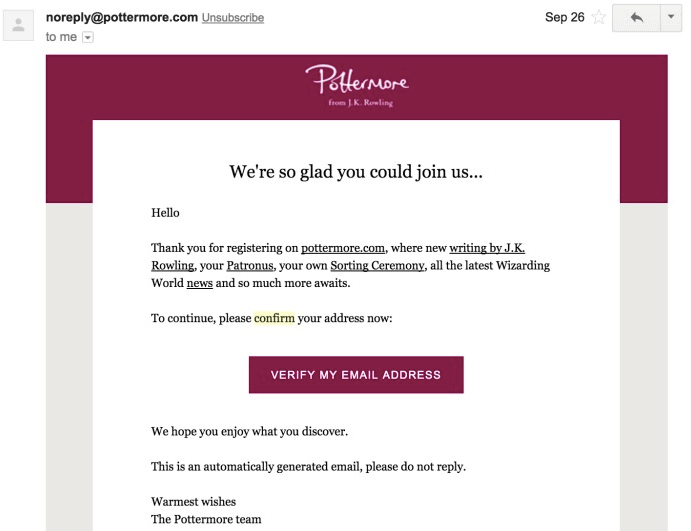
A good confirmation email confirms what they signed up for, gives them a reason to be glad they did, and makes the confirmation action impossible to miss. It shouldn’t feel like a bureaucratic step. It should feel like the beginning of something.
Link to your privacy policy, and make it readable
Your privacy policy needs to be accessible from your opt-in form. Under GDPR this is a hard requirement; under CAN-SPAM it’s good practice. But a privacy policy that’s 4,000 words of legal boilerplate that nobody reads isn’t really serving anyone.
Consider a brief plain-language summary alongside the full document: what data you collect, what you use it for, who you share it with, and how long you keep it. Transparency here builds trust, and trust is what makes subscribers stick around.
Frequently Asked Questions
Is double opt-in actually necessary?
It depends on where your subscribers are based and what your sending practices look like. For EU audiences, double opt-in is the most defensible way to demonstrate GDPR consent. For US-only audiences, CAN-SPAM doesn’t require it, but the list quality and deliverability benefits are real regardless of legal obligation.
If you’re unsure, double opt-in is the safer default. The slightly lower conversion rate at signup is usually offset by better engagement over time.
What does GDPR compliance actually require in practice?
At minimum: explicit, documented consent before you add someone to your list; a clear explanation of what you’ll use their data for; a way for subscribers to access, correct, or delete their data on request; and a process for acting on those requests. Double opt-in handles the consent documentation piece well. The rest requires some operational infrastructure, but it doesn’t have to be complicated.
The underlying logic here is simple even if the regulatory details aren’t. Subscribers who chose to be on your list, who understood what they were signing up for, and who confirmed their intent are better subscribers by every measure that matters. They engage more, complain less, and stay longer.
Building your list that way is slower than the alternative. It’s also the only approach that holds up over time: for your deliverability, your sender reputation, and your relationship with the people you’re trying to reach.
If you’re using Alterable to personalise content at the moment of open, a high-quality, engaged list is what makes that personalisation worth doing. The more intentional your list-building, the more your content investment pays off.