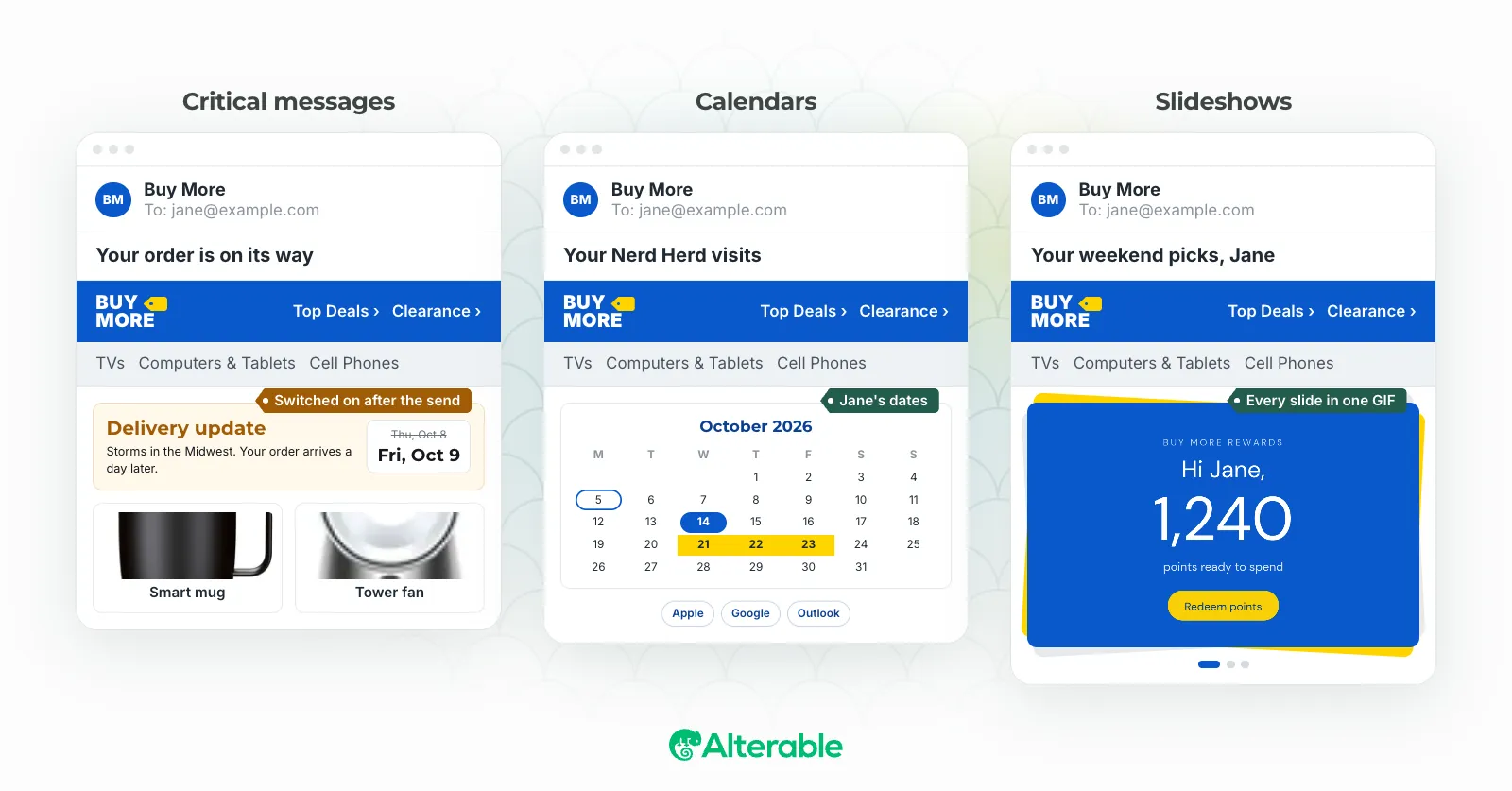
Think back to when “personalized email” meant dropping a first name into the subject line and calling it a day. Marketers were excited about it. Subscribers were… less so.
That trick still works (a little), but the bar has moved considerably. Today, a growing number of the emails landing in your inbox know where you are, what you last browsed, how many loyalty points you have, and whether the item sitting in your cart is about to sell out. That’s not magic. It’s dynamic content. And if you’re not using it, you’re leaving a measurable amount of engagement on the table.
Here are ten of the best ways to put it to work, with real examples from brands doing it well.
1. Personalized Names (Done Right)
Let’s get the obvious one out of the way. But stay with me, because there’s a right way and a wrong way.
Dropping “Hi Sarah” at the top of an email is table stakes. What actually moves the needle is weaving the recipient’s name into the email in a way that feels earned: in the subject line, in a product recommendation, or in the body copy when you’re referencing something specific to their account.
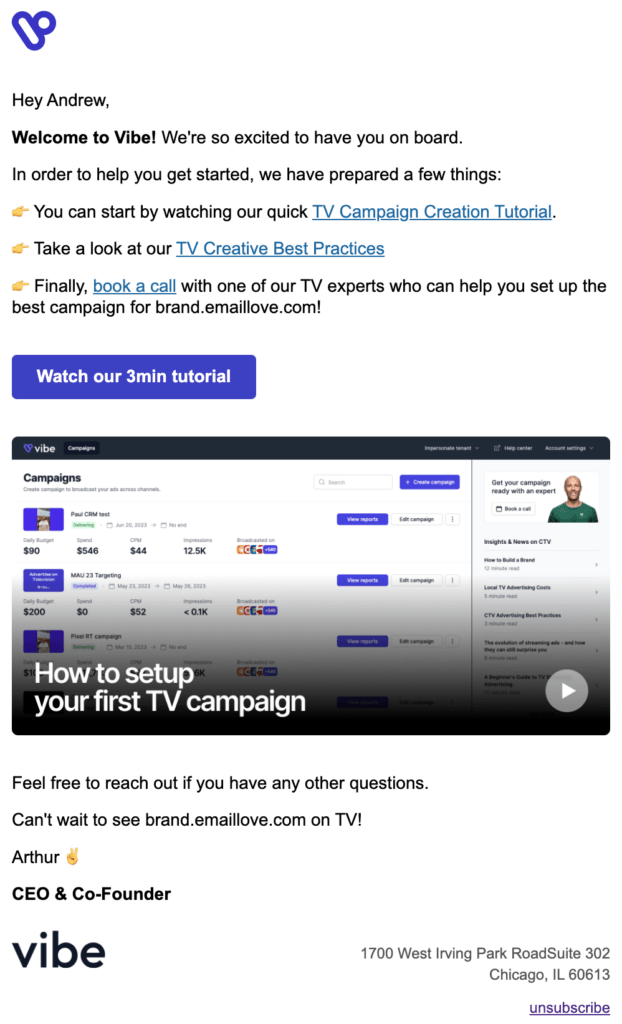
Vibe does this well in their welcome emails. The name appears alongside tailored onboarding steps (tutorial recommendations and strategy reviews), so it reads less like a mail merge and more like someone actually paying attention. That’s the difference between good and bad dynamic content in email.
2. Countdown Timers for Real-Time Urgency
I have a soft spot for countdown timers. They’re one of the most viscerally effective tools in email marketing, and they’re surprisingly underused in dynamic email content.
A static “Sale ends Sunday!” carries some urgency. A live timer ticking down to the minute carries a lot more. The psychology is simple: you can see time running out. That does something to your brain that text alone can’t replicate.
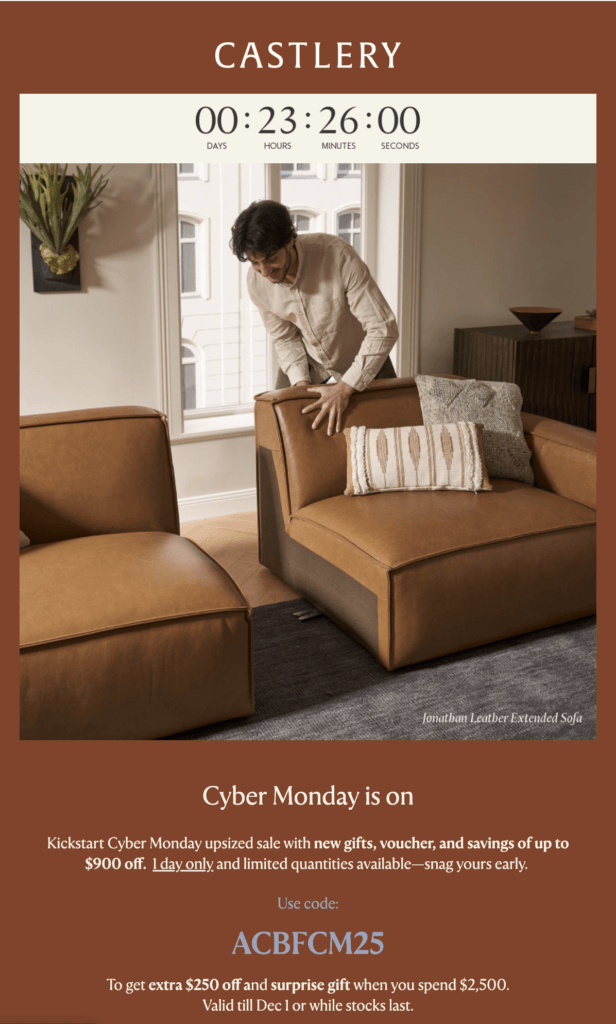
They work especially well for flash sales, cart recovery emails, event signups, and reward expirations. Castlery used one to great effect in a Cyber Monday campaign: a prominent countdown paired with tiered discounts ranging from $150 to $900 off. You couldn’t look away.
3. Abandoned Cart & Browse Content
Here’s a stat worth knowing: the average cart abandonment rate across e-commerce sits around 70% (Baymard Institute, 2023). That’s a lot of revenue left at the checkout.
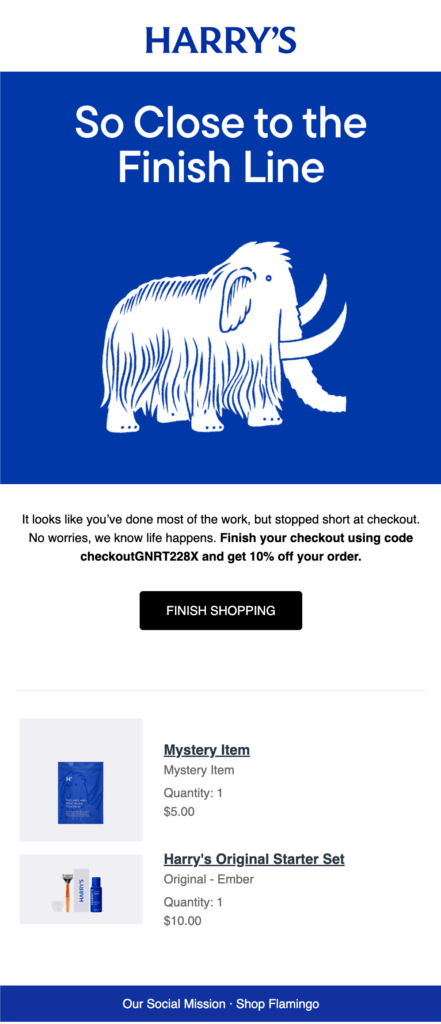
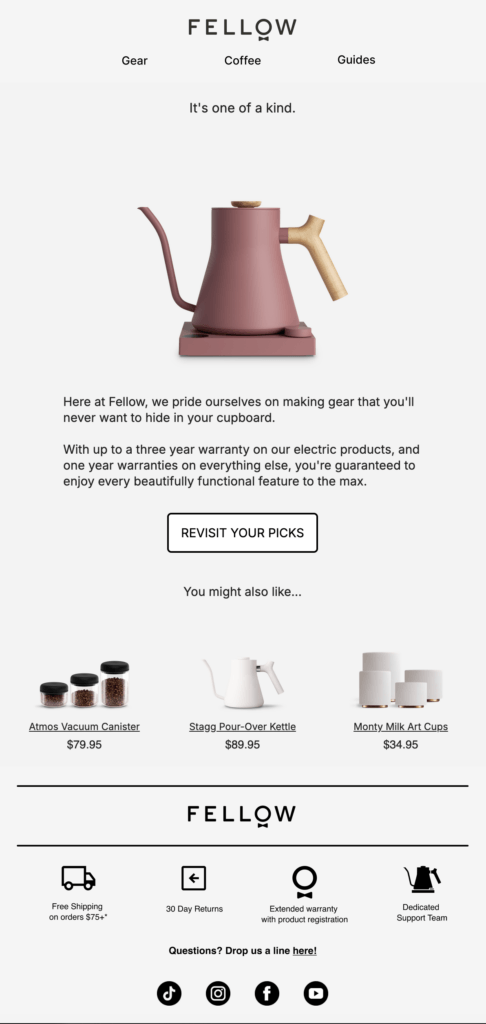
Rather than sending a generic “You left something behind!” message, dynamic blocks can pull in the exact product: current image, real-time price, and live inventory status. Harry’s does this cleanly with a targeted product focus and urgent copy. Fellow goes a step further with their browse abandonment emails, surfacing the specific item the subscriber viewed with subject line language that mirrors what they were actually searching for. It feels almost uncanny. In a good way.
4. Birthday & Anniversary Emails
Birthday emails generate open rates two to three times higher than standard campaigns (Experian). That figure has been around a while, but the principle hasn’t changed: people respond to being remembered.
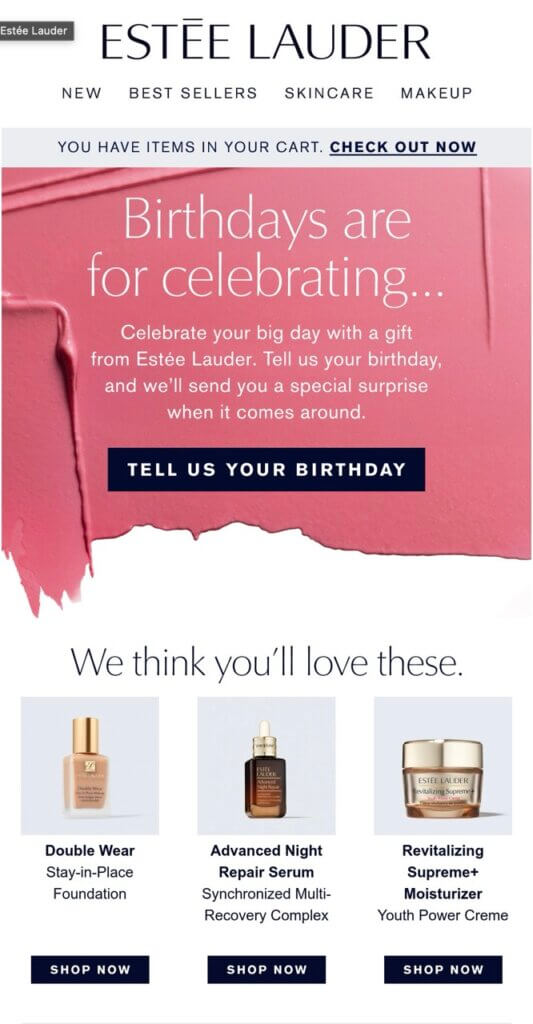
The key is making the email feel like a genuine gesture rather than an automated checkbox. Use the name. Offer something real. Match the tone to your brand. Estée Lauder takes a clever approach: their birthday email collects the subscriber’s birth date to enable future personalization, while simultaneously showing cart reminders. Two layers of personalization in one message. That’s efficient and effective dynamic email content.
5. Location-Based Personalization
One template. Many different emails. That’s the promise of location-based personalization, and it’s more achievable than you might think.
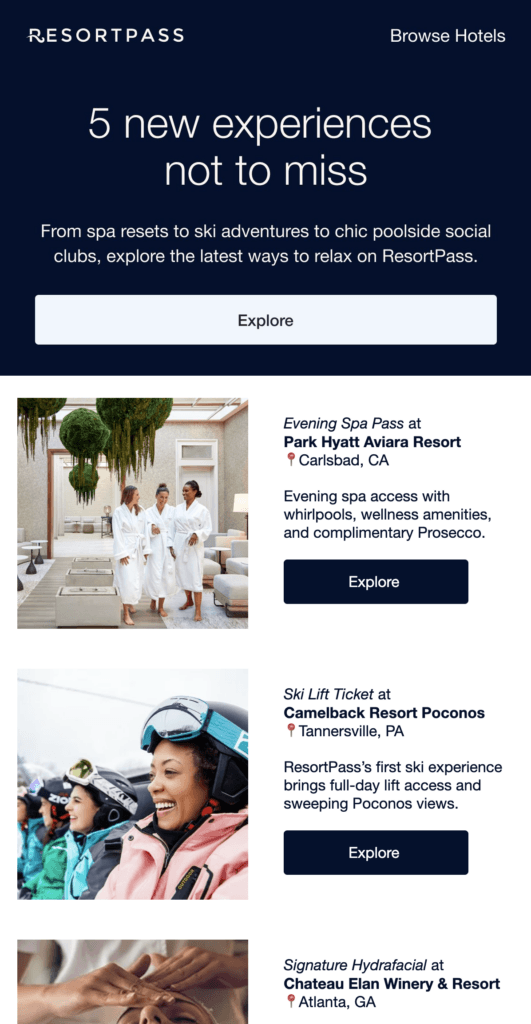
You can surface nearest store locations, adapt imagery to regional weather, show localized pricing for international audiences, or promote events relevant to where the subscriber actually lives. ResortPass uses this well, presenting resort experiences in card-style layouts that populate dynamically based on subscriber region or browsing history. The email feels custom. The effort to produce it isn’t.
6. Personalized Product Recommendations
You’ve experienced this as a consumer. Amazon and Netflix have trained us to expect it: the right recommendation, at the right moment, for the right person. Email can do the same thing.
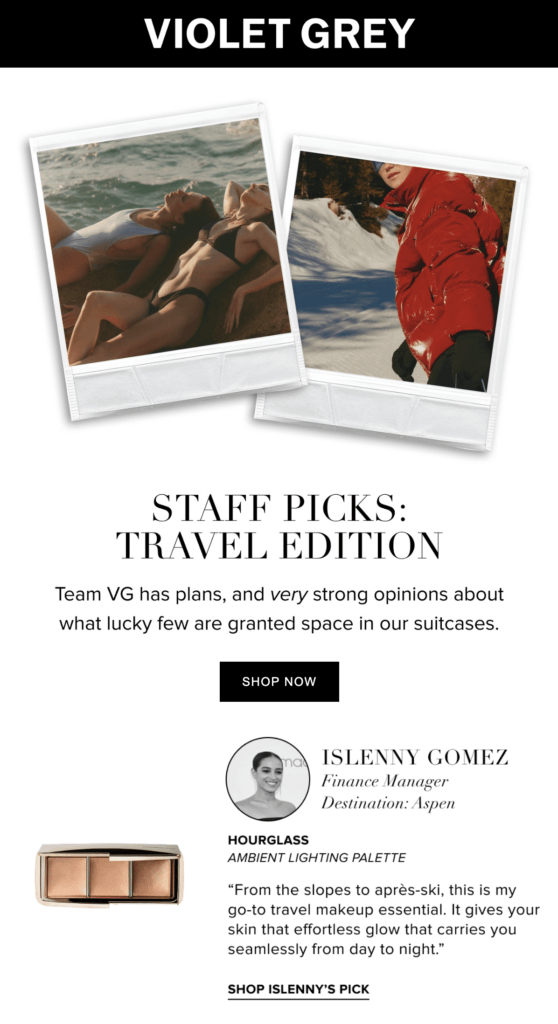
Dynamic product blocks built on purchase history, browse behavior, or collaborative filtering can surface genuinely relevant suggestions rather than a generic bestseller list. Violet Grey’s “Staff Picks: Travel Edition” emails pair algorithmic recommendations with staff headshots, destination labels, and personal quotes. It transforms a product grid into something that reads like advice from a friend who knows your taste. That’s a real upgrade.
7. Real-Time Inventory and Stock Status
Nothing erodes trust faster than an email promoting something a subscriber can’t actually buy. Sending campaigns with stale inventory data is an easy mistake to make, and an equally easy one to fix.
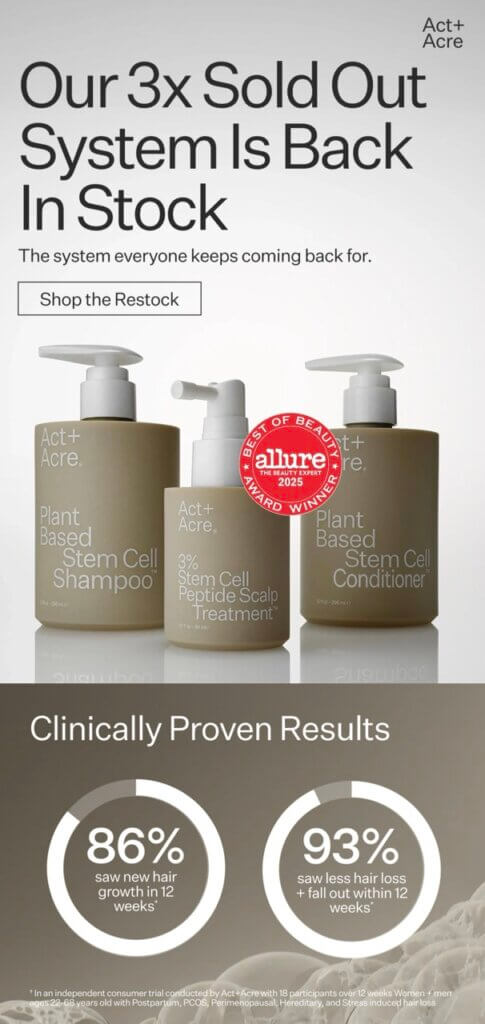
With real-time inventory connected to your email, you can suppress out-of-stock items automatically, show live stock levels to create genuine scarcity, and trigger back-in-stock alerts at exactly the right moment. Act+Acre leaned into the concept beautifully. Their subject line, “Our 3x Sold Out System Is Back In Stock,” uses the product’s own sales history as the hook. The urgency is real because it’s earned.
8. Loyalty Tier and Rewards Status
If you run a loyalty program and you’re not using it to personalize your emails, you’re sitting on a goldmine of untapped data.
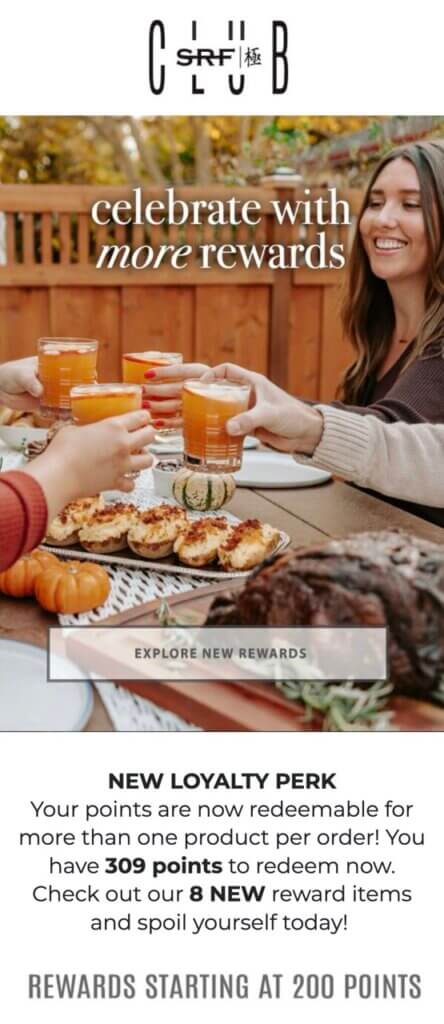
Dynamic content in email lets you display current point balances, show progress toward the next tier, and adjust the tone of your messaging based on where a subscriber actually sits in the program. Snake River Farms addresses subscribers by name and wraps their loyalty status in language that frames membership as belonging to something real: an exclusive community, not just a points ledger. It’s a subtle distinction that makes a real difference in how the email lands.
9. Behavior-Based Re-engagement
“We miss you” is the most overused subject line in re-engagement email. Your subscribers have seen it. They don’t care.
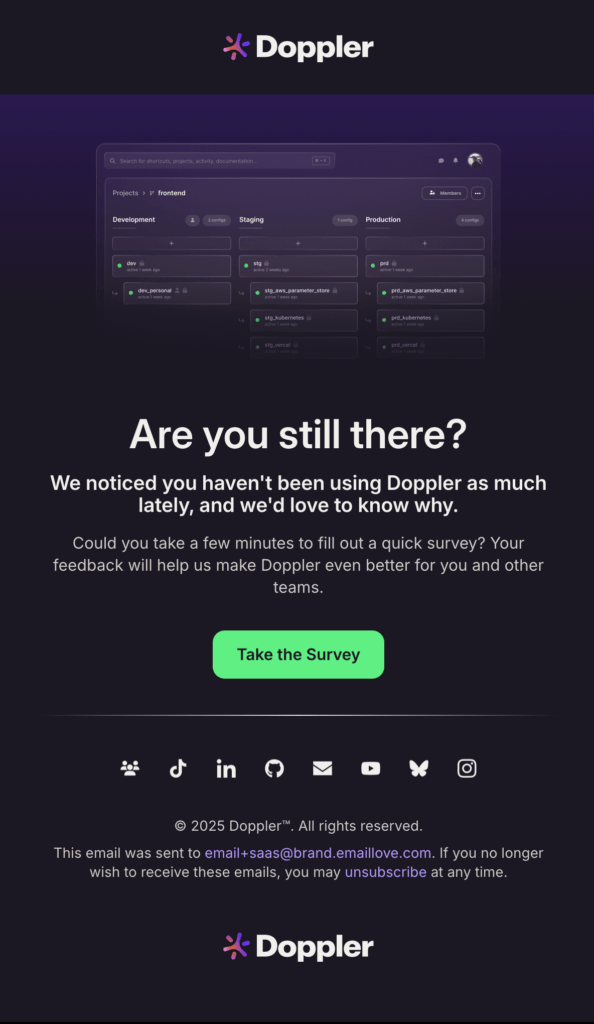
What actually works in email dynamic content is specificity. Reference the last product they browsed or bought. Highlight what’s new in the categories they’ve shown interest in. For software products, surface their actual account activity: usage streaks, features they haven’t tried yet. Doppler takes an interesting angle with their re-engagement email, inviting subscribers into a dialogue by requesting product feedback and showing a screenshot of the dashboard relevant to how they’ve actually used the product. It feels like a conversation, not a save-the-relationship plea.
10. Personalized Year-in-Review & Data-Driven Storytelling
This is the one that, when done well, people actually share. Spotify Wrapped figured that out (you’ve probably shared one yourself). Email can do the same thing.
Pulling together a subscriber’s purchase history, usage patterns, milestones, and preferences into a personalized narrative creates something that feels genuinely special. And with open-time rendering, the data is current when the email opens, not frozen at send time. Rest’s “Your 2025, Wrapped in Evercool®” email celebrates the subscriber’s year while announcing end-of-year sales, turning a promotional email into something warm and worth opening. That’s no small feat.

Putting It All Together with Alterable
All ten of these tactics share something in common: they treat the subscriber as an individual, not just an inbox address. The content adapts to who’s reading, what they’ve done, and when they’re opening.
If you’re curious how real-time rendering makes this possible, that’s exactly what Alterable was built for. Countdown timers with accurate remaining time. Recommendations that reflect current inventory. Personalized blocks that update at open. Worth a look if you’re ready to go beyond “Hi {{first_name}}.”
All campaign examples in this article were sourced from Email Love, a library of 30,000+ real email campaigns from 5,000+ brands, updated monthly.