
The Magic of Personalized Emails: Why They’re Worth Your Time!
If you’ve ever opened an email and thought, “Wow, this was written just for me!” Well, that’s the magic of personalization! And it’s not just a nice touch; it’s a tried-and-true way to boost engagement and sales. When done right, email personalization can help your brand stand out in a crowded inbox. According to recent studies, personalized emails can improve click-through rates by at least 14% and conversion rates by at least 10%.
Personalized emails aren’t just nice to have; they’re a must-have for anyone looking to connect with customers on a deeper level. Generic “Dear Valued Customer” emails don’t cut it anymore, especially when building long-term loyalty. So, why not dive into email personalization and give your subscribers an experience they’ll actually enjoy?
What’s so fantastic about email personalization? For starters, it makes your audience feel like they’re not just another name on a list. As we go through the step-by-step process, I’ll show you how to make each email feel like a personal letter, even if you send it to thousands of people.
Step 1: Know Your Audience (No, Really Know Them!)
Before crafting personalized emails, you need to really understand your audience. This isn’t about throwing a name in the subject line; it’s about knowing what they like, what they dislike, and what they clicked on last Tuesday.
Start by collecting data. Use signup forms, quizzes, and customer surveys to gather information. And don’t be afraid to go a little Sherlock Holmes here: pay attention to what users do on your website.
Which products are they browsing? What articles are they reading? This intel will become the foundation of your personalization strategy.
One successful example is Amazon. They’ve mastered the art of analyzing past behaviors to make product recommendations in their emails. No wonder they make billions off just email suggestions alone! Be like Amazon. Well, maybe don’t try to be Amazon, but learn from their dedication to using data to create a personalized experience.
Step 2: Segment, Segment, Segment
Not all of your subscribers are the same, so don’t treat them that way. Segmentation is the process of dividing your email list into smaller groups based on shared characteristics. It’s like throwing a party where you know exactly which group will love karaoke and which one just wants the snacks.
Start simple. Segment by demographics like age, gender, or location. Once you get the hang of it, get a little more creative. Segment by purchasing behavior, engagement level, or even favorite products.
A great example of effective segmentation is Spotify. They send out personalized playlists based on a user’s past listening habits. This level of personalization would be impossible without proper segmentation. Imagine sending a jazz playlist to a heavy metal fan. Talk about a quick unsubscribe!
Step 3: Get Personal with Dynamic Content
Dynamic content lets you create one email but display differently depending on who’s viewing it. Think of it as a chameleon email (see what we did here? 😉) that changes based on the recipient’s preferences, location, or behavior. With dynamic content, you can send more targeted messages without creating a hundred different email templates.
Using Alterable’s email personalization tools, you can add dynamic elements like location-specific offers, birthday shoutouts (using dynamic images), or product recommendations (using dynamic products). It’s like a one-size-fits-all approach, if that size magically adjusted itself to fit each person perfectly.
Netflix nails this with its recommendation emails. They use personalized content to suggest shows or movies users will most likely enjoy based on their viewing history or location. This simple yet effective strategy keeps users engaged and coming back for more.
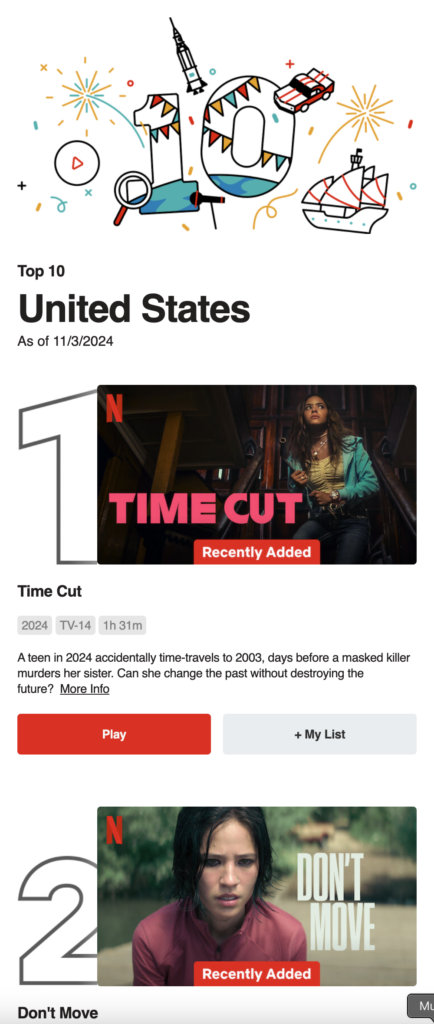
Example of a recommendation email from Netflix to USA users.
Step 4: Timing Is Everything
Timing matters just as much as content. Sending an email at the wrong time can be like telling a joke and hearing crickets. Experiment with send times to see when your audience is most active and receptive. Some audiences respond best in the morning, while others might engage more during a late-night scroll.
One of the best practices for email personalization is to consider time zones. A 9 a.m. email might work wonders in New York, but that’s a 6 a.m. wake-up call in LA. Use tools like Brevo or Klaviyo, which allow you to send emails based on a recipient’s local time.
Sephora’s campaigns are a good example. They use time-based triggers and send reminder emails at different stages of the buying process, reminding people to come back and complete a purchase or even suggesting similar products at the right moment.
Step 5: Craft Irresistible Subject Lines
Subject lines are the opening act of your email. They’re the handshake, the introduction, the first impression. A personalized subject line can increase open rates by up to 50%, so it’s worth spending a little extra time here.
Try to include the recipient’s name or a specific detail that will grab their attention. A/B testing subject lines is also a fantastic way to learn what your audience actually opens. Make it short, snappy, and to the point. Just don’t get too gimmicky.
Here’s a fun example from OpenTable. They sent an email with the subject line, “We miss you, [Name]! Here’s a sweet deal to get you back.” Using names and offering a clear benefit can make all the difference in a busy inbox.
Step 6: Use Interactive Content to Engage
Interactive content is like the cherry on top of email personalization. It keeps recipients engaged by letting them interact directly with the email. Think quizzes, polls, or a live countdown timer for an upcoming sale.
A great example is REI’s interactive product recommendation emails. They use quizzes to guide customers toward the products that best suit them. This adds a personalized touch and makes the experience fun.
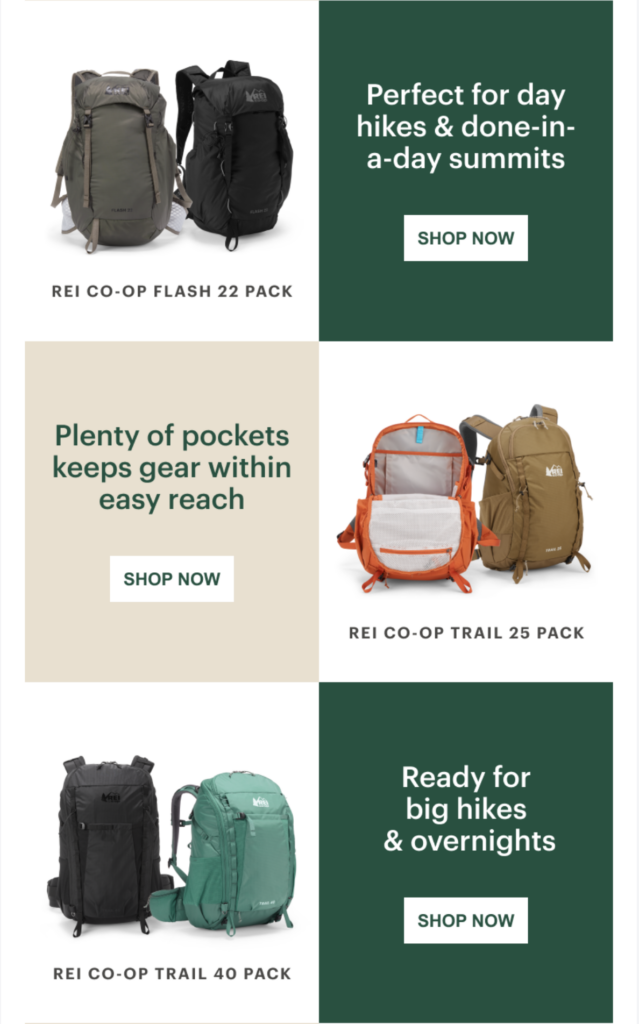
Example email from REI Co-op showing different backpack options
Email personalization tools like Alterable make adding interactive elements easy. These tools offer templates for adding interactive features without requiring a degree in coding.
Step 7: Make Data Your Best Friend
If you’re not measuring, you’re guessing. After each campaign, take the time to analyze what worked and what didn’t. Track open rates, click-through rates, and conversions. Most importantly, pay attention to which personalization tactics were successful.
Data lets you refine your approach and improve over time. Tools like Google Analytics and your email provider’s analytics dashboard are your best friends here. With each campaign, you’re collecting more data to make your personalization sharper and more effective.
One good example of data-driven success is Airbnb. They track customer preferences and behavior to send personalized recommendations. Whether it’s unique stays or experiences, Airbnb uses customer data to create an email experience that feels tailor-made for each user.
Step 8: Automate (But Keep It Human!)
Automation can be a lifesaver, but don’t let it make you sound like a robot. Set up automated flows for welcome emails, abandoned cart reminders, and re-engagement campaigns, but take time to craft each message thoughtfully.
Tools like ActiveCampaign and Drip make it easy to set up these flows while still allowing for customization. Automated doesn’t mean impersonal; it just means you can keep the conversation going even when you’re not there to press “send.”
Etsy does this well. Their abandoned cart emails include personalized product images and gentle nudges to complete the purchase. It feels more like a friendly reminder than a hard sell.
Step 9: Test, Test, and Test Some More
Personalization isn’t a “set it and forget it” strategy. Constant testing is how you find out what works on your list, rather than on lists in general. A/B test different subject lines, content, send times, and interactive elements. Keep the winners, and refine the rest.
Amazon is a classic example here. They’re constantly testing their emails to find out what works best, from product recommendations to timing. And guess what? That’s why they keep us all hooked.
Step 10: Keep It Fun and Authentic
Last but definitely not least: add a sprinkle of personality. People respond to genuine, friendly content. Don’t be afraid to inject a little humor, a little charm, and a little you into the mix.
Remember, your audience isn’t just a list of names. They’re real people who like to be entertained, informed, and delighted. Give them a reason to look forward to your emails!
Take a cue from brands like Chubbies. Their emails are hilarious and packed with personality. They don’t just sell; they entertain. And as a result, people actually enjoy opening their emails.
Personalization is a journey, not a destination. Start simple, experiment often, and always strive to create experiences that make your audience feel valued and understood. Follow these steps, and you’ll be on your way to mastering the art of email personalization.