There’s a version of this post you’ve probably read before. Too many emails. Irrelevant content. Bad design. These are true. They’re also so widely documented that if they were enough to fix your unsubscribe problem, you’d have fixed it already.
The more interesting question is why subscribers leave when you think you’re doing everything right. Solid content. Reasonable frequency. A real double opt-in. And still, the list churns.
I’ve seen this enough times that I’ve stopped treating unsubscribes as a simple signal. They’re usually the visible end of a longer story, and understanding that story is more useful than patching the symptom.
The unsubscribe isn’t where the problem starts
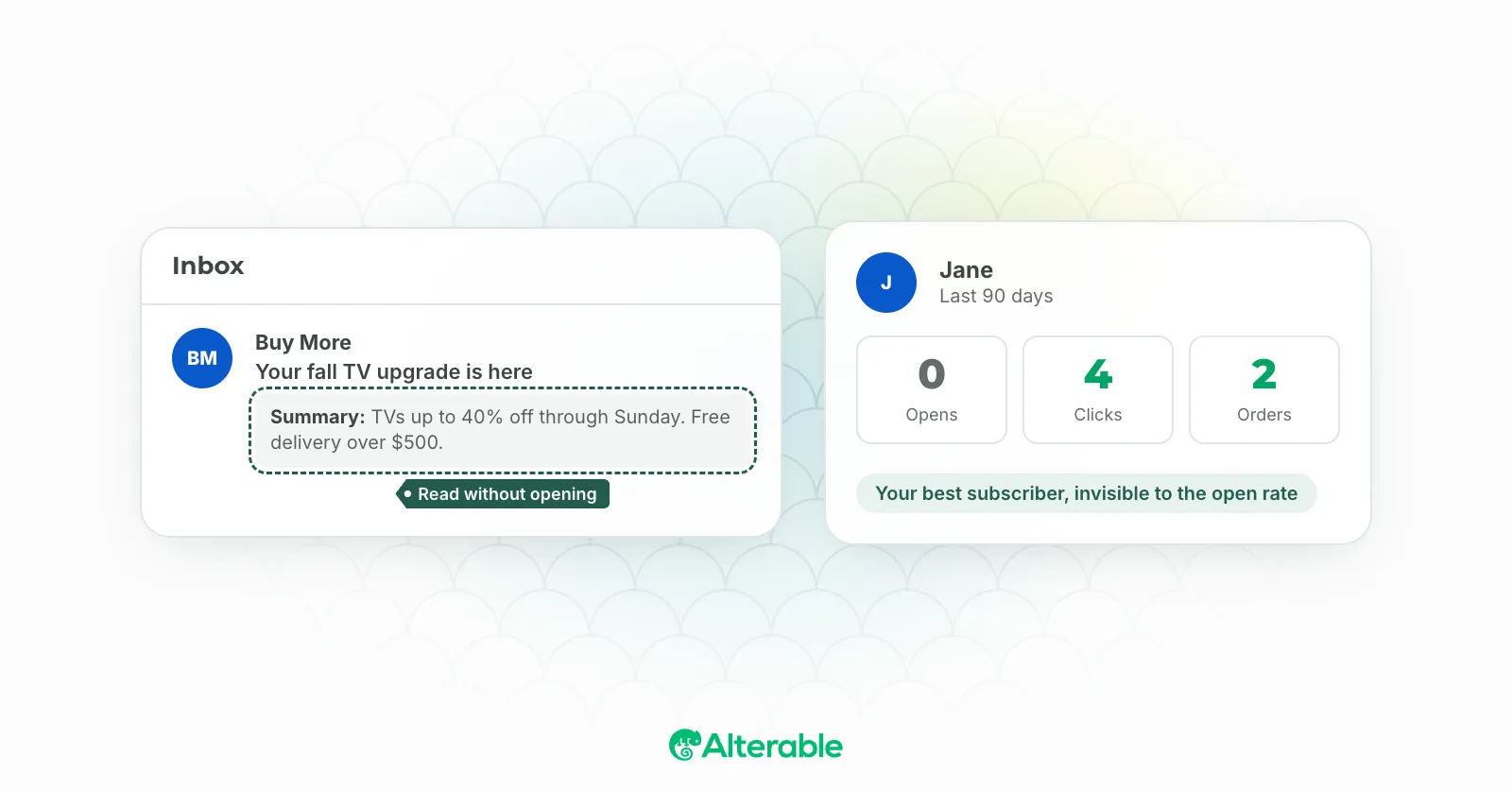
By the time someone clicks “unsubscribe,” they’ve already checked out. The actual disengagement typically starts weeks or months earlier: they stop opening, stop clicking, start ignoring. The unsubscribe is just the administrative close on a relationship that ended long ago.
This matters for two reasons. First, the subscribers who are quietly disengaged but haven’t unsubscribed are often more damaging to your deliverability than the ones who leave cleanly. Gmail, Outlook, and other mailbox providers watch engagement signals across your list. Low open and click rates from a large inactive segment drag down your sender reputation, affecting inbox placement even for your engaged subscribers. A clean unsubscribe is, in a real sense, better for your program than a disengaged subscriber who stays.
Second, if you’re only looking at your unsubscribe rate, you’re watching the lagging indicator. The actionable signal is earlier: engagement drop-off at 60 or 90 days. That’s where intervention is still possible.
The expectation was set wrong at the start
One of the most underappreciated causes of email list churn happens before the subscriber has received a single campaign email. It happens in the sign-up flow.
Someone opts in for a discount code, or to download a resource, or to enter a giveaway. They get what they came for. Then the weekly newsletter starts arriving and it has nothing to do with why they subscribed. From their perspective, they signed up for one thing and got something else.
This is permission erosion. The subscriber technically gave you consent, but the consent was contextual. When the content doesn’t match the context of the opt-in, early unsubscribes spike. I’ve seen welcome email open rates in the 50-60% range drop to single digits by the third send because the campaign content felt like a bait-and-switch.
The fix isn’t complicated: set the expectation clearly at sign-up and then deliver on it. If you’re building a newsletter list, say so. Tell them how often you’ll send and roughly what you’ll send. Subscribers who know what they’re getting in to are much less likely to feel misled when it arrives.
Sending too infrequently is as real a problem as sending too much
The conventional wisdom is that too many emails cause unsubscribes. That’s true. But the opposite problem is less discussed and probably just as common.
When you send infrequently, once a month, or sporadically, subscribers forget they opted in. Your email arrives and they don’t recognize you. Their first instinct is often the spam button, not the unsubscribe link. That’s worse: a spam complaint counts significantly harder against your sender reputation than an unsubscribe.
There’s also a compound effect. Subscribers who don’t hear from you regularly don’t build the habit of engaging with your emails. When you do send, the open rate reflects that absence. If you then send frequently during a promotional period, holiday sales, for instance, the sudden volume increase looks suspicious to both subscribers and mailbox providers.
Consistency is underrated. A predictable rhythm, even at modest frequency, keeps your name recognizable and your engagement rates more stable.
The content changed and nobody said so
Brands evolve. Products expand. Editorial direction shifts. What started as a tightly focused newsletter about one topic gradually becomes a broader publication covering something adjacent. For subscribers who signed up for the original thing, the widening scope can feel like a different publication entirely, even if the change happened gradually.
This is worth paying attention to, especially for younger brands that are still finding their focus. If your content strategy has shifted, acknowledge it explicitly. A brief note explaining the change, what’s staying, what’s new, and what subscribers can expect, treats your audience like adults and gives them a chance to opt in to the new direction consciously rather than quietly drifting away from it.
What the unsubscribe rate actually tells you
A 0.2% unsubscribe rate on a single send doesn’t tell you much on its own. Context matters. Unsubscribes after a campaign to a newly acquired segment are different from unsubscribes from a long-term subscriber base. Unsubscribes immediately following a sign-up are different from unsubscribes after 18 months.
The questions worth asking aren’t just “how many” but “who” and “when.” Which segments churn faster? At which point in the subscriber lifecycle? After which type of send? Those patterns reveal the actual problem: a misaligned opt-in source, a content track that doesn’t hold subscribers past the first few sends, a promotion-heavy sending period that wears out your audience.
Digging into your unsubscribe data at that level takes more work than watching the aggregate rate. But it’s the difference between knowing your list is churning and understanding why, and one of those leads to an actual fix.
A word on the subscribers who don’t unsubscribe
Not everyone who’s done with your emails will tell you. Many will just stop opening. Some will filter your emails automatically. A small number will mark you as spam without unsubscribing.
The ones marking spam are worth watching closely. Most ESPs surface complaint data either directly or through feedback loops, and keeping spam complaint rates below 0.1% (Google’s published threshold) is important for inbox placement. If complaints are rising, it’s almost always a sign that your list contains people who either forgot they subscribed or never intended to in the first place, a list hygiene problem, not a content problem.
The quiet disengagers are where most of the list churn actually lives. Tracking them through engagement scoring, assigning activity scores based on opens, clicks, and conversions over a rolling window, lets you identify subscribers before they disengage fully and respond while there’s still something to work with. A preference check, a content track adjustment, a frequency reduction. None of it is guaranteed to work. But it’s better than discovering six months later that a third of your list stopped caring and you missed the window.
If you want to benchmark where your engagement actually stands before your next send, our free Email Deliverability Test will show you how your authentication setup looks to receiving servers, one of the technical factors that can quietly suppress engagement even when your content is solid.